
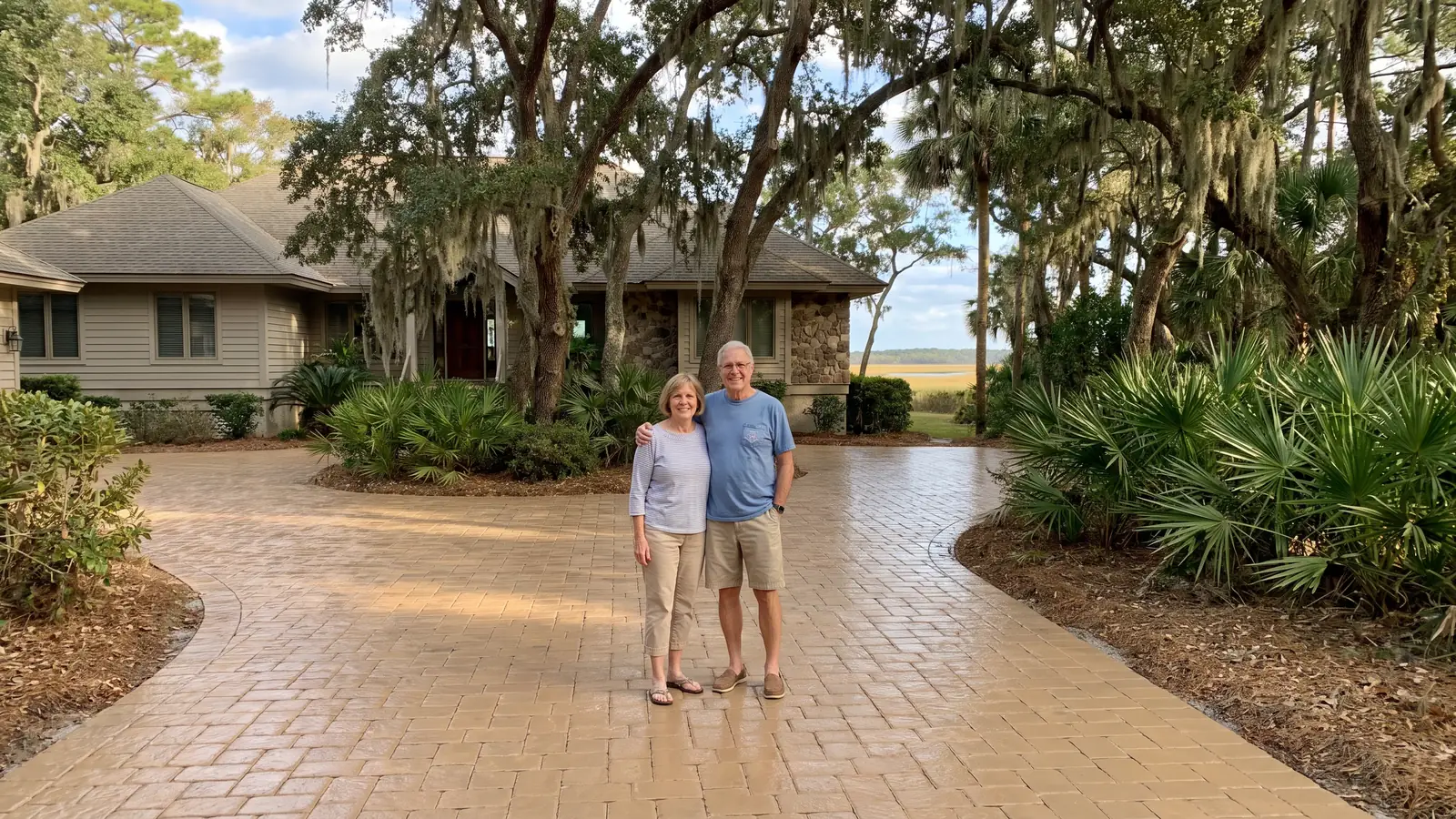
Paver sealing for Greenland homes
Paver Sealing in Greenland, FL
Several Greenland villages date from 2006 or later; call (904) 664-0041 to plan a free sealing estimate for young pavers.
- Brings out deeper paver color
- Fresh joint sand helps lock pavers in place
- Gives weeds less room to grow
- Makes the surface easier to keep clean
- Free estimate, no obligation
Request a Free Estimate
Free, no obligation.
Fast, careful paver sealing in Greenland
Paver sealing is available across Greenland, from the villages along Greenland Road to the streets near Greenland Park. A local contractor cleans, re-sands and seals driveways, walkways, pool decks and patios, and the estimate is free. Once you get a free estimate, expect an answer within 1 business day, often much sooner.
Maybe your pavers went in with the house and now look flat and tired, with a white haze in spots and sand missing from the joints. A wash, fresh sand and a new coat can bring one even color back. To talk it through before you book, call (904) 664-0041 and tell the contractor how old your pavers are.
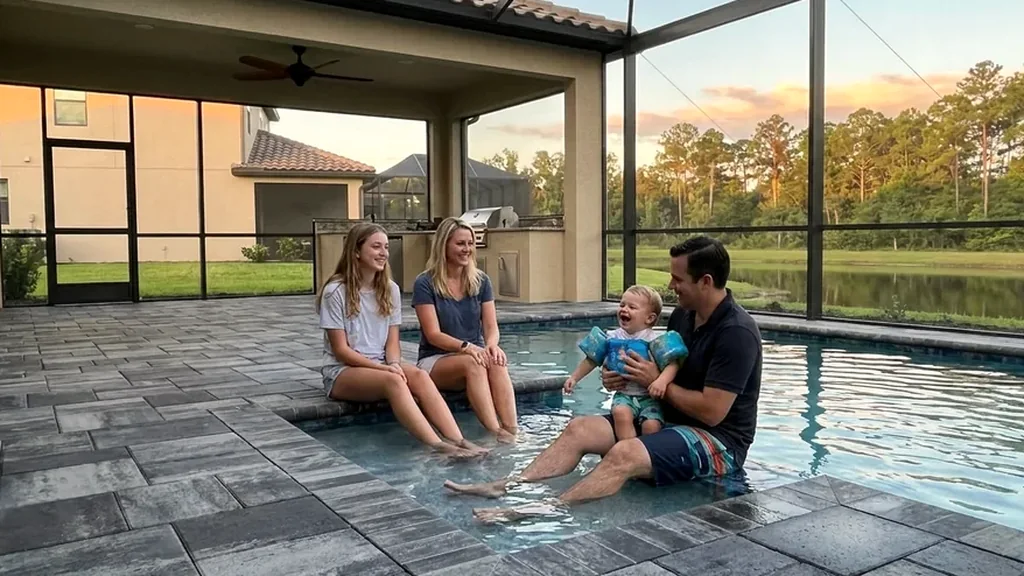
Why hire a local paver sealing contractor in Greenland?
Several Greenland villages date from 2006 or later, and many have an HOA, so the timing of a first coat and the community rules both matter. For help with either one, get a free estimate.
See it first
The contractor checks your Greenland pavers in person and prices them before work starts. Declining is always fine.
Know the going rate
Posted prices across Northeast Florida run $1.75 to $3.25 per square foot to clean, sand and seal, a handy yardstick for any bid.
Respect the cure time
New pavers need weeks before a first coat. The contractor can check how far along yours are.
HOA friendly choices
Show the contractor your community rules, and the finish can be matched to them. You still make the call.
Get Your Free Estimate in Greenland
Tell us about your pavers in Greenland.
Free, no obligation
What paver problems show up most in Greenland?
A first coat that has to wait
Greenland Chase homes were built from 2006 to 2023, with a median year of 2008, so many pavers here are young. A Jacksonville paver company says to wait 30 to 60 days after install before the first coat, and a St. Augustine area company says 60 to 90 days. That wait lets moisture escape and lets white mineral haze, called efflorescence, rise to the surface. Sealing too soon would trap that haze under the coat, which means the haze has to be treated first. Ask your installer for the install date, since the clock starts there and not on the day you move in. A driveway laid recently may still be inside the waiting window, while one laid in 2007 has had plenty of time to fade. Ask your builder or installer when the pavers went down, since the date sets your plan.
Flat ground that drains slowly
The USDA Pottsburg soil series has its type location 0.3 mile south of Greenland Road. It is somewhat poorly and poorly drained, with a seasonal high water table 0 to 24 inches deep. Cottages at Greenland has a median elevation of 11 feet. Slow drainage means pavers stay damp longer after a storm, which means sealing waits for a truly dry surface. A soft or wet base can also let pavers settle, and sealing locks in whatever is there, so sunken spots are reset before the coat. Bartram Springs next door has about 471 of its 1,025 acres in wetlands and open space, which shows how much water this corner of Duval County holds.
Summer storms that empty the joints
Jacksonville averages about 52 inches of rain a year, mostly May through September in short, hard downpours. One Jacksonville company says those storms flush sand out of unsealed joints. Open joints let soil in and give weeds a place to root. New neighborhoods with fresh pavers are not exempt, since sand can start leaving within a season or two. Refilled joints also hold the pavers tighter, which is why the wash and the sand come before the coat. Sealteam, a Jacksonville company, says unsealed joint sand eventually washes out, and then storm water reaches the base layer and starts eroding it.
Orange streaks from sprinklers
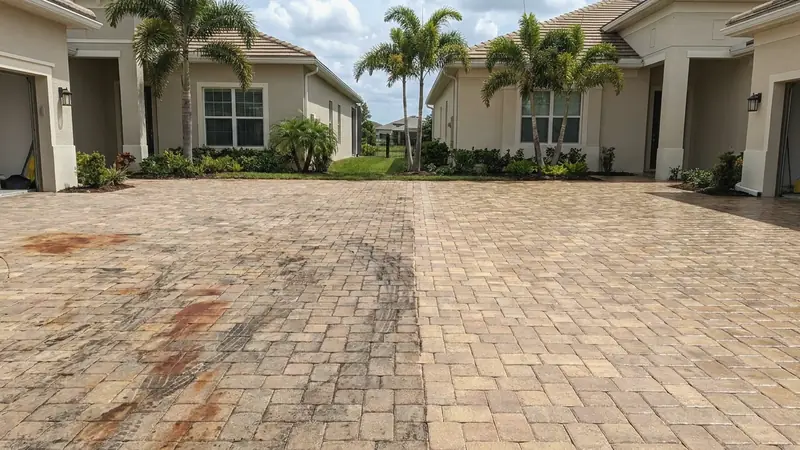
University of Florida extension says most Florida well water is high in iron and that irrigating with it often leaves orange stains. If your Greenland yard waters with a well, look for rust-colored lines where the spray lands on the pavers. Those marks are treated during the wash, before any sealer goes on. Aiming the heads away from the pavers keeps new marks from forming. Rust is easiest to treat before it has been sealed in. The stains are easier to treat before they are sealed in.
HOA rules on the finish
Florida Statute 720.3035 lets an association review the appearance of improvements to the extent its declaration or guidelines allow. One Jacksonville site advises reading your documents for rules about exterior changes such as sealer color or a wet-look finish. In Greenland Chase every listed home reports an HOA. Check your rules before you choose, because a shiny coat is easier to change before it goes on than after. A contractor can show you samples so you can choose a finish that your association accepts. One neighborhood page lists a median HOA fee of $57 a month in Greenland Chase, and the Cottages at Greenland report a median of $295 a month with a gate, a pool and grounds maintenance.
Do Greenland Chase and the Cottages at Greenland need different paver care?
Yes, because one is a gated condominium village and the other is a set of houses. The Cottages at Greenland were built in 2006 and 2007, and they have a security gate, a pool, a clubhouse and association-run grounds. Greenland Chase has homes built from 2006 to 2023, and every listed home reports an HOA. Tell the contractor which village you live in when you get a free estimate.
Nearby communities named on those pages include Waterford Estates, Williams Walk, Stonefield and Sumerlin at Bartram Park. Greenland itself is listed as ten named villages and sections, so a neighbor two streets over may follow different rules. Call (904) 664-0041 and ask the contractor to work from your own association's documents.
Greenland Park, at 11808 Fayal Drive, covers 20.3 acres and was dedicated on April 20, 1990, so parts of Greenland are older than the villages around them. One neighborhood page lists homes here built from 1903 to 2022. A house that old may carry coats nobody remembers, so get a free estimate and mention when you moved in.
What does paver sealing cost in Greenland?
Two numbers set the price: how many square feet you have and how much prep they need. Young pavers in a Greenland village often need little more than a wash and fresh sand. Posted prices in the region run $1.75 to $3.25 per square foot, which is the yardstick to use. For your exact figure, get a free estimate.
A few things add to the total. Sealer from an earlier job may need stripping first, a gated entrance can slow the crew, and small patios cost more per square foot than big drives. Ask for a written scope along with the walkthrough. Call (904) 664-0041 to find out which apply to you.
| Paved area | Typical example | Clean, sand and seal |
|---|---|---|
| 300 sq ft | Small patio or walkway | $525 to $975 |
| 600 sq ft | Two car driveway | $1,050 to $1,950 |
| 1,000 sq ft | Large driveway or pool deck | $1,750 to $3,250 |
| 1,500 sq ft | Driveway plus pool deck | $2,625 to $4,875 |
Math based on the $1.75 to $3.25 per square foot that Northeast Florida paver companies published as of November 2026. Your contractor sets the actual price after seeing the surface. Repairs, leveling and stripping failed sealer are usually extra.
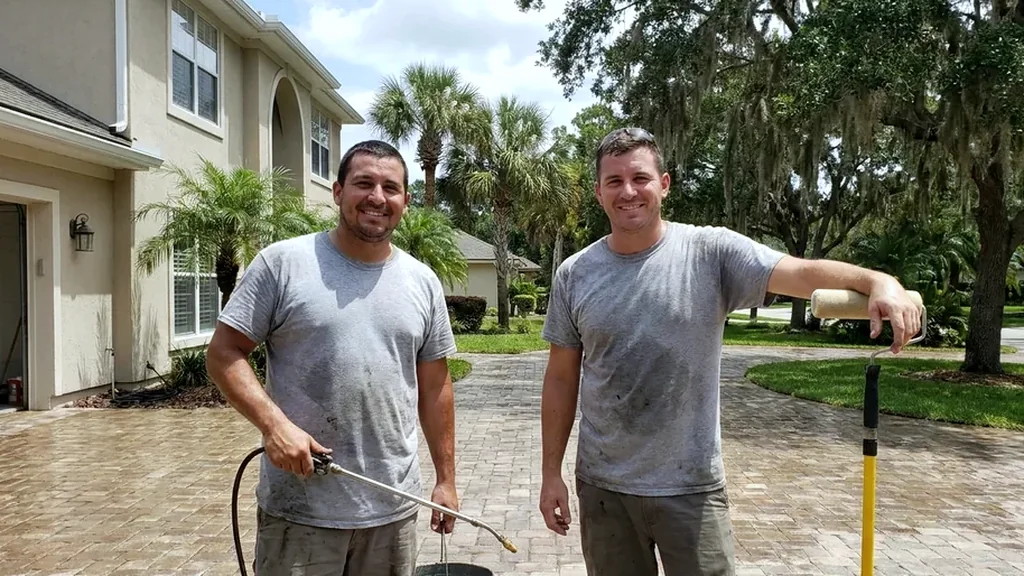
How does a paver sealing job work in Greenland?
Pin down the age
The first question is how old the pavers are. If they went in within the last couple of months, the contractor may suggest waiting, since companies advise 30 to 90 days before a first coat. Older pavers get a look for past sealer, because water-based sealer cannot cover a solvent-based coat. Dips and lifted edges are marked for repair. Bring any builder paperwork, since it may list the install date.
Scrub the surface
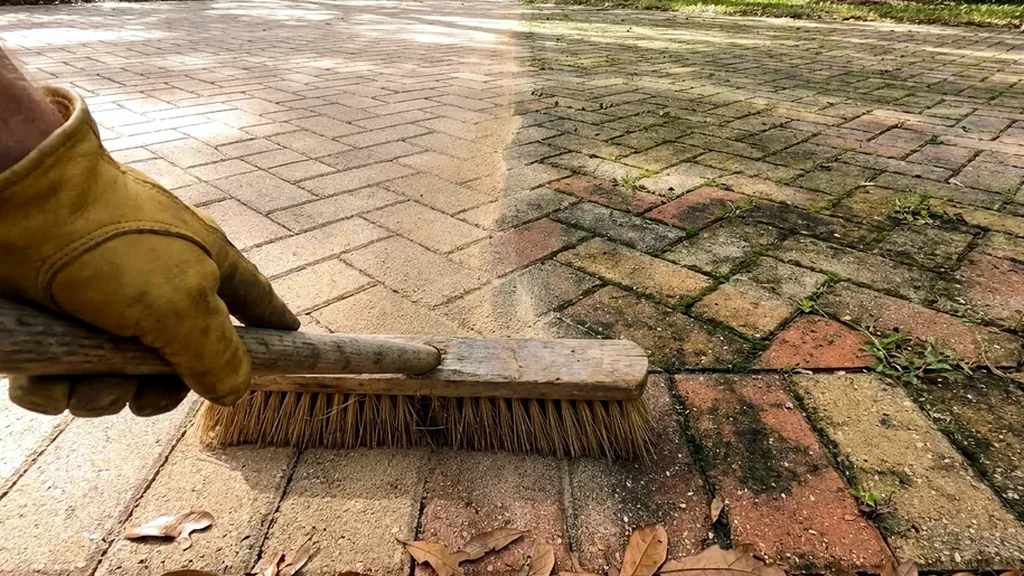
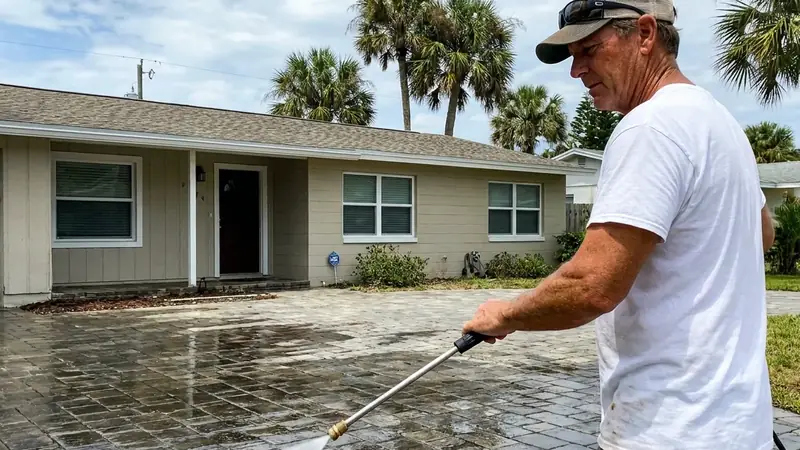
Cleaning removes dirt, green film, tire marks and white mineral haze. Rust left by sprinkler spray gets treated before anything else. Rinse runoff is kept away from beds and the garage door. A pool deck is cleaned toward the drain so water does not pool where the sealer will go. A second pass may be needed for heavy haze or rust, and the contractor says so before moving on.
Fill the joints
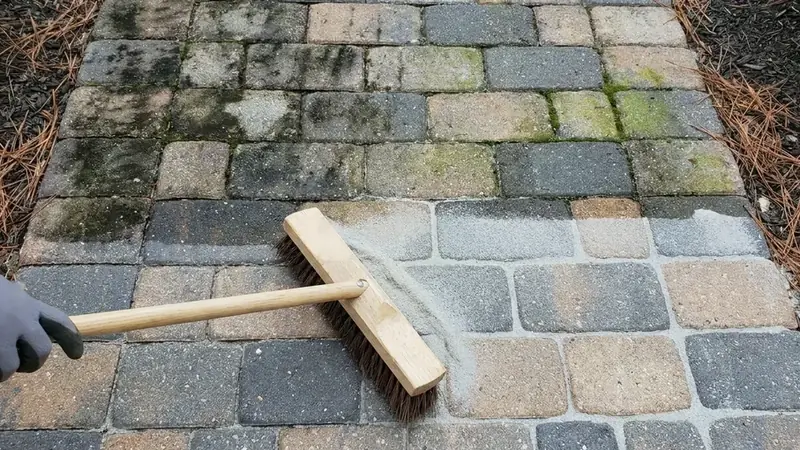
Fresh sand goes in after the wash, never before, as one Jacksonville company puts it. Greenland's summer downpours can empty a joint quickly, so the contractor brushes sand in until every line is full. The surface is then swept clean. Gaps that sat open for a long time get cleared of soil first. The contractor checks the low corners of the driveway last, since sand tends to leave there first.
Let the ground dry
The USDA's Pottsburg soil series, which has its type location just south of Greenland Road, is poorly drained, with a water table 0 to 24 inches down. Where ground like that sits under a lawn, damp spots can last after a storm. The contractor checks the surface, not just the sky. If anything still looks dark, the coat waits. The contractor may test a small spot before coating the whole surface.
Coat and cure
Sealer goes on by sprayer and a back-roll. Matte stays quiet, while wet look deepens color but shows scuffs sooner. Companies commonly quote two to five years for a first coat to wear out. Walk on it within hours, and keep cars off longer, as the product and weather allow. Ask when you can put furniture back on a patio or lanai, and when cars can return to the drive.
Complete paver services in Greenland
A Greenland job moves through wash, fresh sand, dry time and sealer, in that order. Cleaning clears dirt, green film and rust, and the sand goes in next. Sealer is last so nothing trapped underneath can show later. To hear how long each part runs on your property, call (904) 664-0041.
Your surfaces probably include a driveway, an entry walk and a lanai or pool deck. Sun fades the drive first, while shaded corners grow green film and decks take wet feet. Each gets its own treatment. When you get a free estimate, list every surface you want sealed.
Finish choices come in two pairs: water-based or solvent-based, matte or wet look. A solvent-based coat from an earlier job blocks a water-based product, so the old coat decides first. Matte tends to suit HOA streets and hides scuffs. Call (904) 664-0041 to match a finish to your community's rules.
Two clocks control the date. One is the age of the pavers, which can mean weeks of waiting before a first coat. The other is the weather, since sealer needs a dry surface and Jacksonville's driest months run November through April. To plan around both, get a free estimate.
Questions to ask before you hire
- Will sealing make my pavers darker, and is there a finish that keeps them light?
- Do you take a card, and is anything due before the work begins?
- Will you measure the job in person, or can you quote from photos I send?
- Will you clear the weeds and ant hills out of the joints first?
- If it rains the night after you seal, what happens to the coat?
- Will the sealer make my pool deck slick when it gets wet?
- If the sealer starts to flake in a few months, who do I call?
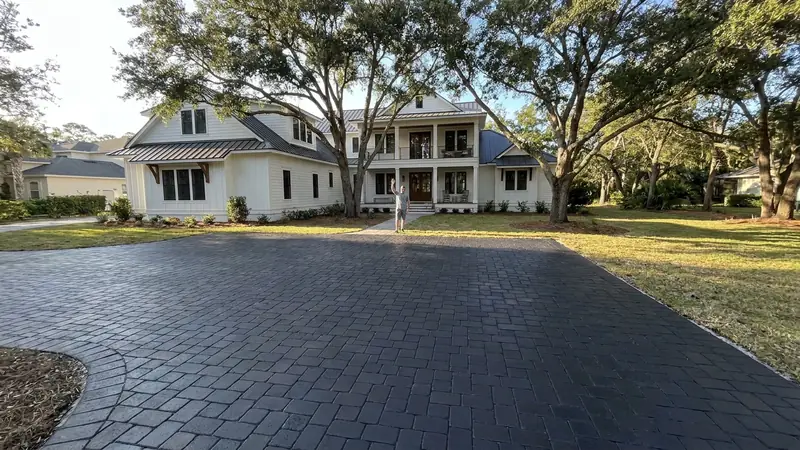
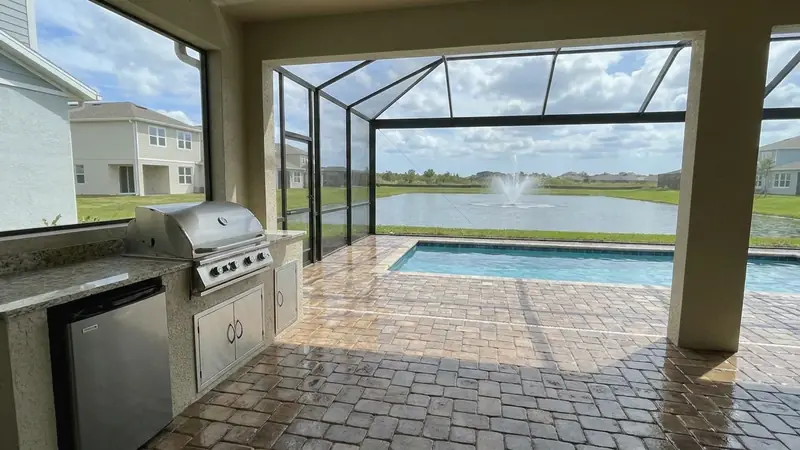
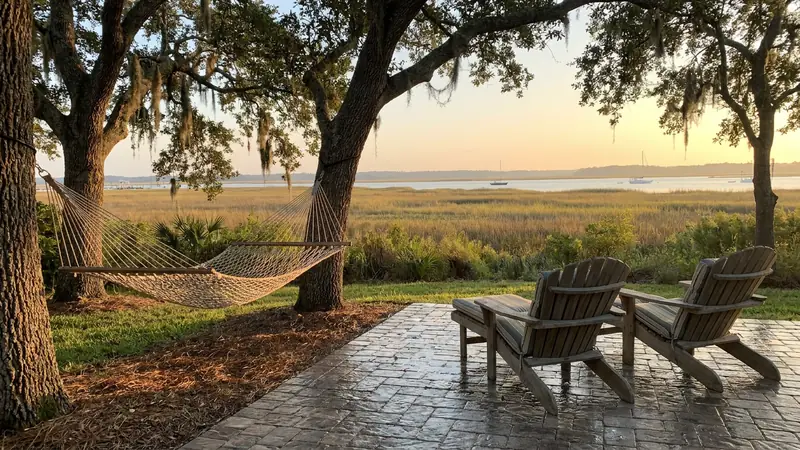
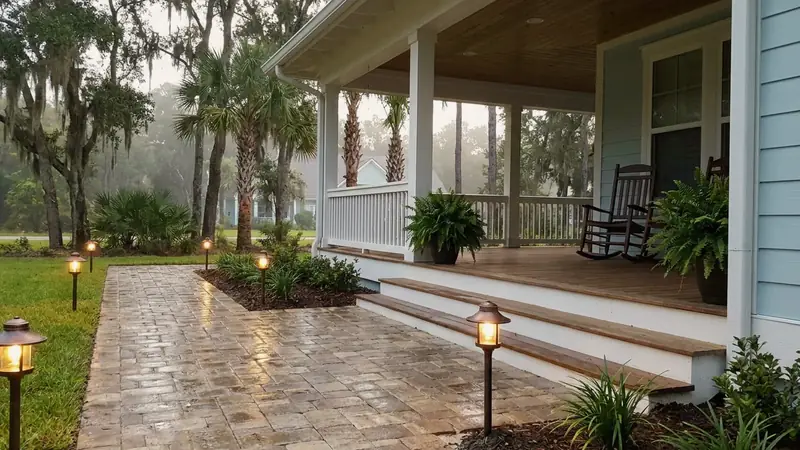
What do sealed pavers look like around Greenland?
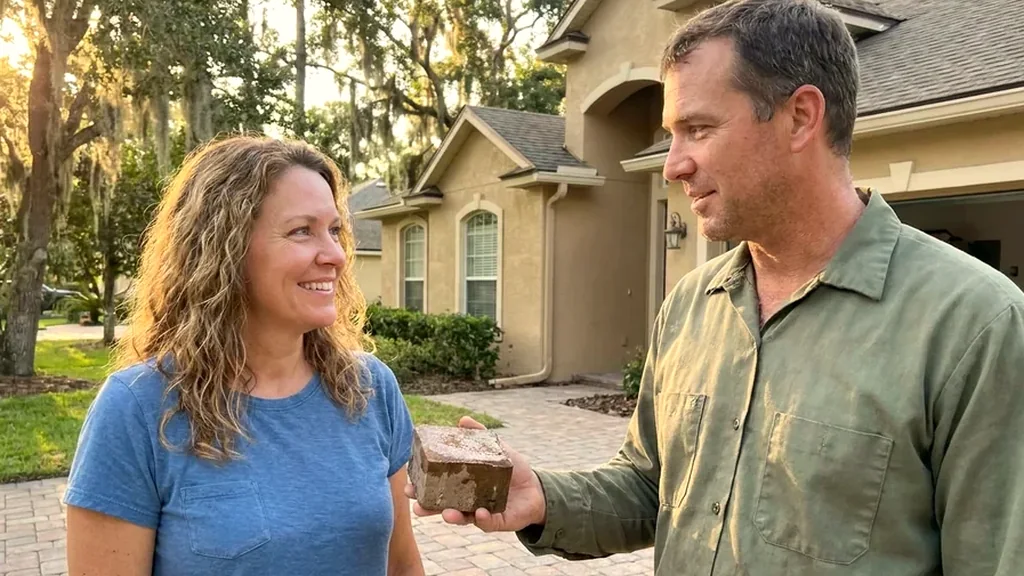
Why local matters in Greenland
Ask a Greenland neighbor which village they live in and you will often hear a different set of rules. A local contractor starts there. The answer decides the finish, the hours and who signs off. To reach a contractor who already works these villages, call (904) 664-0041.
Slow drainage is the other local fact. Water can sit after a storm on ground like this, and the wet season runs May through September. A contractor who knows that keeps a spare date handy. To hear how dates get picked, get a free estimate.
Many pavers here are young, so the first question is age, not stains. A local contractor can often tell from the subdivision where you stand in the cure window. That spares you a wash you would repeat later. If you are unsure, get a free estimate and share your street and move-in year.
What should a contractor know about the layout of Greenland?
Mainly that Greenland sits at the southern edge of Duval County, where the line meets St. Johns County. Its ZIP, 32258, held 37,859 people at the 2020 Census, and about 61 percent of occupied homes were owner-occupied. Neighboring Bartram Springs covers 1,025 acres, with about 471 of them wetlands and open space, and was built out by summer 2009. If you live near Racetrack Road, get a free estimate and share your cross street.
Greenland Park anchors the older side of the area. It was dedicated in 1990, grew by 16.5 acres in 1995 and has picnic shelters, ballfields and a playground replaced in spring 2023. The newer villages sit around it, and the older lots are mixed in. Near any of these Greenland landmarks, call (904) 664-0041 and name your street.
Frequently Asked Questions
Why is paver sealing so expensive in Greenland?
Prep is the big cost, not the sealer. Cleaning, joint sand, repairs and stripping failed sealer eat the hours, and small jobs cost more per foot. Insist on a walkthrough and a written scope, so every bid covers the same work. Smaller lots in a village can run higher per foot than a wide driveway, since setup does not shrink.
What is the average cost to seal pavers in Greenland?
Posted prices across Northeast Florida run $1.75 to $3.25 per square foot to clean, sand and seal. Your Greenland total depends on prep, access and old sealer. Get the total area in writing, then divide to compare bids. Young pavers often cost less to prep than old, stained ones, which can help your total.
Is it good to seal pavers in Greenland?
Usually, yes. One local company says Jacksonville sun fades unsealed concrete pavers within 3 to 5 years, and sealed joints hold sand and slow weeds. The tradeoff is upkeep, because a coat wears down and needs redoing. Sealing also makes the surface easier to keep clean, a local company notes.
How long does paver sealing last in Greenland?
Quotes usually run two to five years per coat. Open sun and daily tires cut that span down. A quick water test helps: beads mean the coat works, and a soaked-in spot means it is finished. Ask where your install date and sun exposure put you in that span.
How soon can new pavers be sealed in Greenland?
Wait 30 to 60 days, says one Jacksonville company, or 60 to 90 days, says a St. Augustine area company. The pause lets white mineral haze rise so it can be cleaned off first. Your installer can give you the install date. Sealing too early would seal the haze in, which is why the wait matters.
Do I need HOA approval to seal pavers in Greenland?
Maybe. Florida law lets an association review how improvements look, as far as its own documents allow. Check them for rules on exterior changes, since sealer color or a wet look could be covered. If your community has written architectural guidelines, send them to the contractor before the first visit.
Why do my Greenland pavers have a white haze?
On new pavers, it is often efflorescence, a mineral haze that rises as moisture leaves. A local company says it clears in the first weeks. A haze on sealed pavers can also come from sealer put on damp or laid on thick. Treating the haze first keeps it from being sealed into the surface.
Can new sealer go over old sealer on my Greenland pavers?
Sometimes not, since water-based sealer cannot cover a solvent-based coat. Peeling or hazy sealer may need stripping first. An old receipt or product label can answer the question fast. Ask the installer or the builder whether the pavers were ever sealed.
Nearby areas we serve
Ready for a Free Estimate in Greenland?
Call (904) 664-0041 and tell us about your pavers.
Free, no obligation