
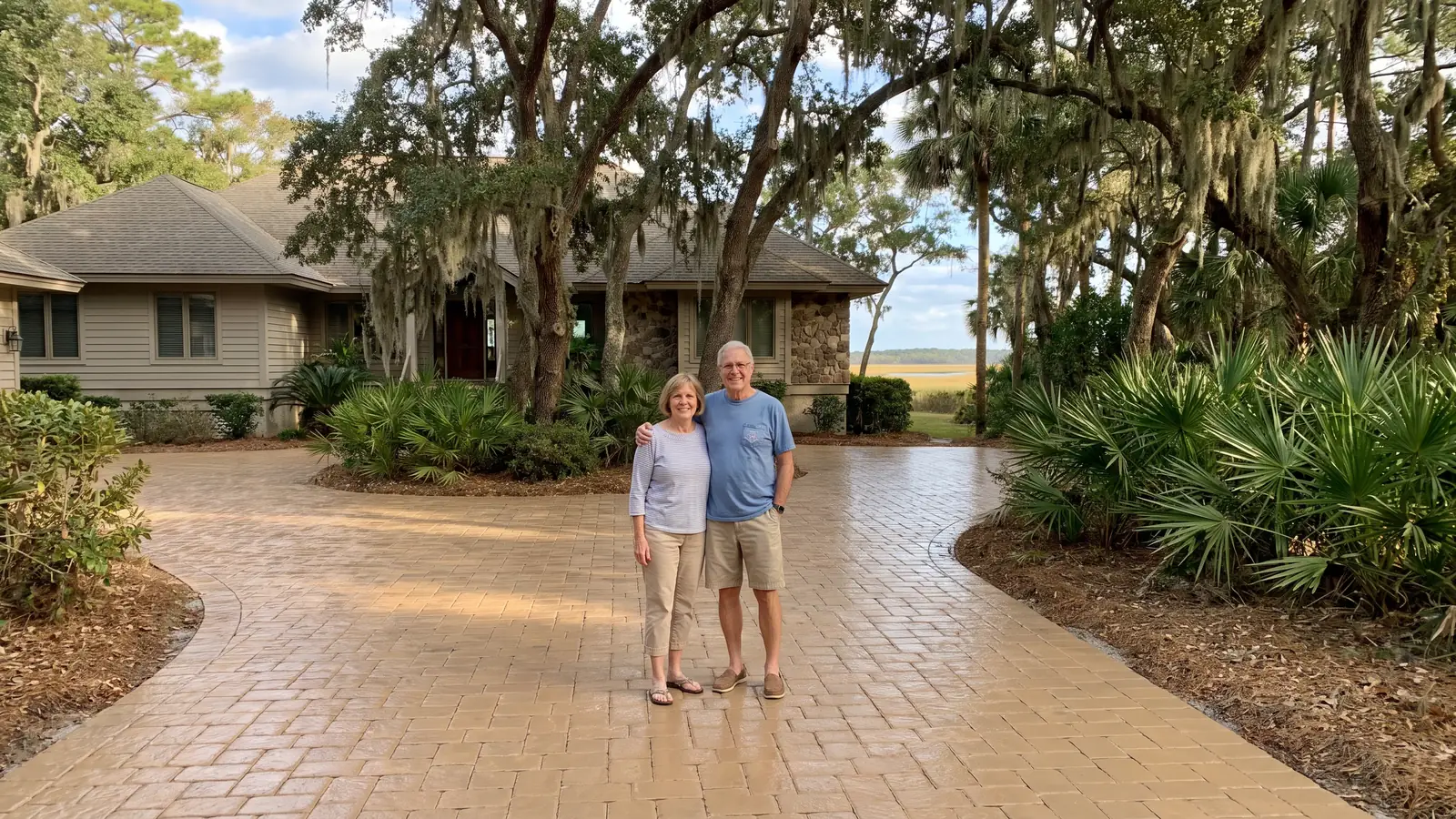
Paver sealing for New Town homes
Paver Sealing in New Town, FL
From College Gardens' 1940s brick to homes finished in 2012, New Town pavers vary; call (904) 664-0041 for a free look.
- Brings out deeper paver color
- Fresh joint sand helps lock pavers in place
- Gives weeds less room to grow
- Makes the surface easier to keep clean
- Free estimate, no obligation
Request a Free Estimate
Free, no obligation.
Fast, careful paver sealing in New Town
Paver sealing in New Town begins with a free look at your drive, porch walk or patio. A local contractor washes the stones, refills the gaps with sand and seals the surface. Use get a free estimate, and an answer arrives within 1 business day, usually much sooner.
New Town homes were built across more than a century, so no two sets of pavers share the same history. Some surfaces are fresh and some have faded to a flat gray. Call (904) 664-0041 and say what yours look like. A price arrives with no obligation attached.
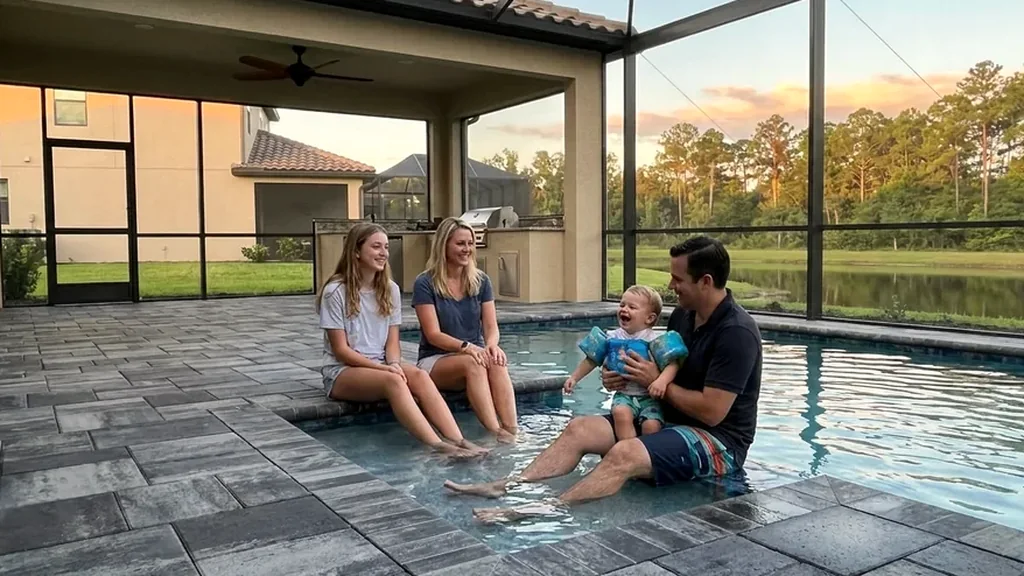
Why hire a local paver sealing contractor in New Town?
New Town mixes brick homes from the 1940s with houses finished as recently as 2012, so people want a contractor who reads a surface before quoting it. To hear how that applies to your property, get a free estimate.
A visit before a price
Someone comes by to see your New Town pavers and puts a price on paper. You agree to nothing by asking.
Clear numbers
New Town bids should spell out the square footage, the work and the product. Clear quotes are easy to compare.
Two sealer types to weigh
A film-forming sealer gives the wet look and costs more. A penetrating one costs less up front and does not last as long.
You make the call
Asking for an estimate commits you to nothing. You still choose finish, date and whether to proceed, and you can say no after seeing the price.
Get Your Free Estimate in New Town
Tell us about your pavers in New Town.
Free, no obligation
What paver problems show up most in New Town?
Full sun on the driveway
Driveways in full sun need resealing about every 18 to 24 months, a paver company notes. Another says unsealed concrete fades in 3 to 5 years under this sun. A drive with no shade tree gets the whole day of it. Sealing slows that fade, so the color you see now lasts longer. The same company says driveways carry hot rubber and road grime on top of the sun. That is a lot for one surface to take.
A coat that has run its course
Sealer wears with sun, rain and traffic, a Jacksonville company explains, and water that soaks in fast instead of beading means a fresh coat is due. Film-forming sealers are redone every 3 to 5 years, while penetrating ones last roughly 5 to 7. If you do not know which kind you have, the contractor can tell from how the surface behaves. Watching whether water soaks in or beads takes seconds, and it tells you a lot about the coat. Reseal before the stones are bare, since bare pavers fade and stain faster. Ask for the old product name if anyone kept it.
Joints on sandy ground
The USDA lists the Ortega soil series, whose type location is in Duval County, as fine sand more than 80 inches deep with rapid permeability. Rain here adds up to roughly 52 inches a year, concentrated in the summer months. One company says heavy summer rain washes sand out of unsealed joints. Once joints drop, soil and weeds move in. Weeds are the visible part of the problem. Fresh sand and sealed joints are what keep them from coming back.
Fourteen summers on the newest homes
A HabiJax project finished more than 100 new homes in New Town in 2012, so the youngest of them have been through about fourteen summers. If those homes have paver drives or walks, the first coat may be long gone. A company advises a 30 to 60 day pause before sealing new pavers. After that, a coat lasts two to five years. Ask the builder or the first owner when the pavers went in, since that sets the clock for the next coat. Brick homes from the late 1940s in College Gardens are far older, so their pavers, if any, were laid much later and in many different years. The New Town Success Zone began in 2008, four years before those homes were finished.
Dark mildew in shaded strips
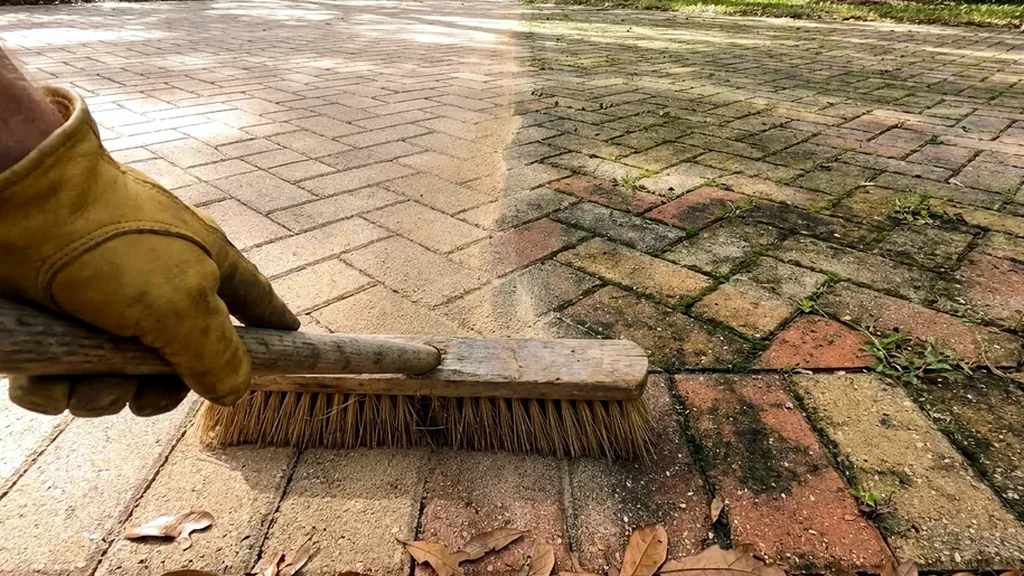
Dark mildew in shaded strips, weeds or ant hills along the joints and low joints are all signs a driveway is ready for sealing, according to a local sealing company. Moss and algae only take hold on pavers where shade is heavy and the surface stays damp. The wash removes the growth before the coat goes on. Once the stones are clean, sealed joint sand makes a hard barrier against weeds and ants, one company says.
Which kinds of homes will a paver contractor see in New Town?
Mostly older ones, and a mix of styles. Metro Jacksonville describes shotgun houses, which are one room wide and two or more rooms deep with a front porch, and frame vernacular homes, the most common style in Florida. College Gardens on the west side has brick homes from the late 1940s. Tell the contractor your street when you get a free estimate.
Newer homes sit among them. A HabiJax project built more than 100 homes here, finished in 2012, and the New Town Success Zone began in 2008. Pavers on those lots are younger than the lots around them. Call (904) 664-0041 and tell the contractor the year your house was built.
ZIP code 32209 counted 36,656 people and 14,237 households in 2020. About 75 percent of housing units are single-family and about 47 percent of occupied units are owner-occupied, though that figure covers more than New Town. Owner or landlord, you can ask for an estimate when you get a free estimate.
What does paver sealing cost in New Town?
Safe Touch's typical First Coast range runs from $1.75 up to $3.25 per square foot cleaned, re-sanded and sealed. Prep time does not shrink on a small job, a Jacksonville guide says, so short walks cost more per square foot. A porch walk and a short drive together may price better than either alone. To get a number for your own pavers and your own street, get a free estimate.
Film-forming sealers cost more and give the wet look, while penetrating sealers cost less up front and wear out sooner, the same guide says. Locked gates and tight side yards add prep time. Call (904) 664-0041, and the contractor can say which of these fit your pavers.
| Paved area | Typical example | Clean, sand and seal |
|---|---|---|
| 300 sq ft | Small patio or walkway | $525 to $975 |
| 600 sq ft | Two car driveway | $1,050 to $1,950 |
| 1,000 sq ft | Large driveway or pool deck | $1,750 to $3,250 |
| 1,500 sq ft | Driveway plus pool deck | $2,625 to $4,875 |
Math based on the $1.75 to $3.25 per square foot that Northeast Florida paver companies published as of November 2026. Your contractor sets the actual price after seeing the surface. Repairs, leveling and stripping failed sealer are usually extra.
How does a paver sealing job work in New Town?
Check the old coat
The contractor looks for flat or chalky color, low joints, weeds and mildew in shaded strips. A simple water test shows whether an old coat is still working. Sunken sections are marked to be reset first, since sealing locks in whatever is there. If you know when the pavers were laid, say so, and bring up any spot that stays wet or any stain that keeps returning.
Stains first, then the wash
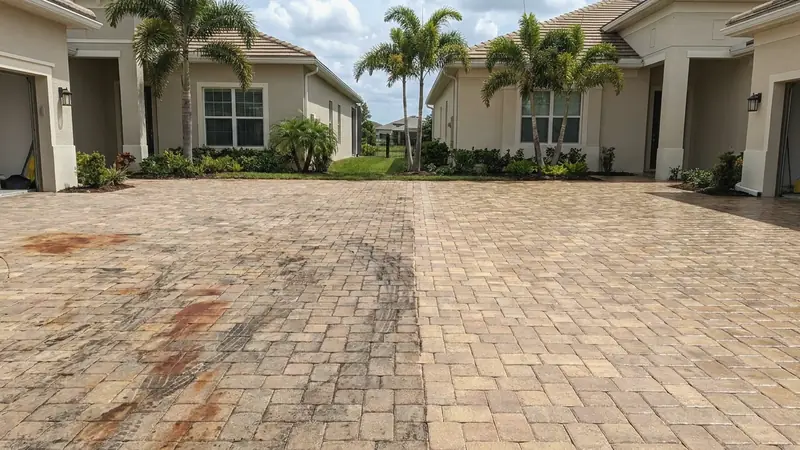
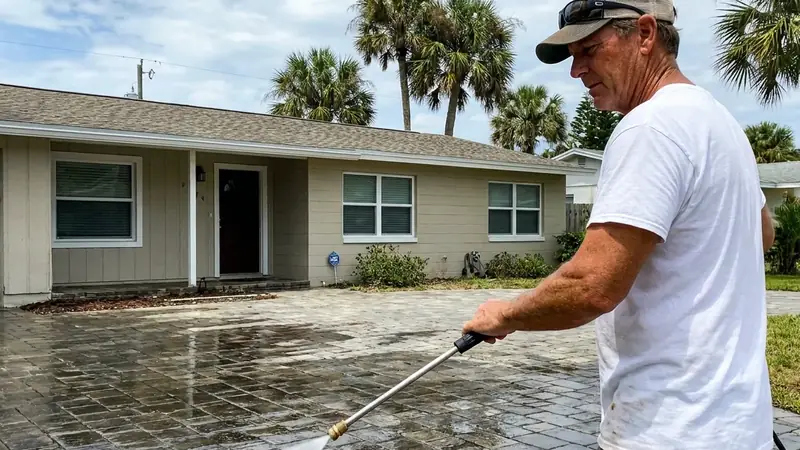
Stains from oil, rust and tires are pre-treated, and some deep ones may not come out completely. The wash that follows clears road grime, hot rubber marks, green film and old residue. Rinse water stays off porch wood and brick where the pavers meet the house. Expect the stones to look darker until they dry. Edges beside steps get a gentler touch, since older masonry can chip.
Sand back into the joints
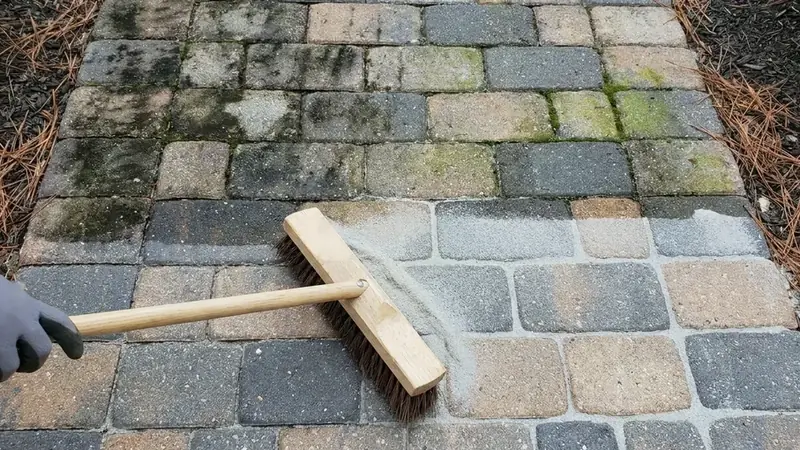
Washing pulls out sand, so fresh sand goes back in before any sealer. Sealed joint sand becomes a hard barrier that slows weeds and ants, one company says. Weeds are cleared first so the new sand fills clean gaps. Drives that lost sand in summer storms may need plenty. Sweeping finishes the step, and the street and garage edges are checked last, since sand leaves there first.
Wait for steady weather
Dry stone is a must before sealing. Spring and fall often bring the steadiest weather for it, one paver company notes. The contractor waits for dry stones and a forecast without a downpour, and a shower mid-job pushes the coat to another day. Damp pavers are the usual cause of sealer that turns white, so the contractor waits instead of rushing a coat onto wet stone.
Seal, then keep the date
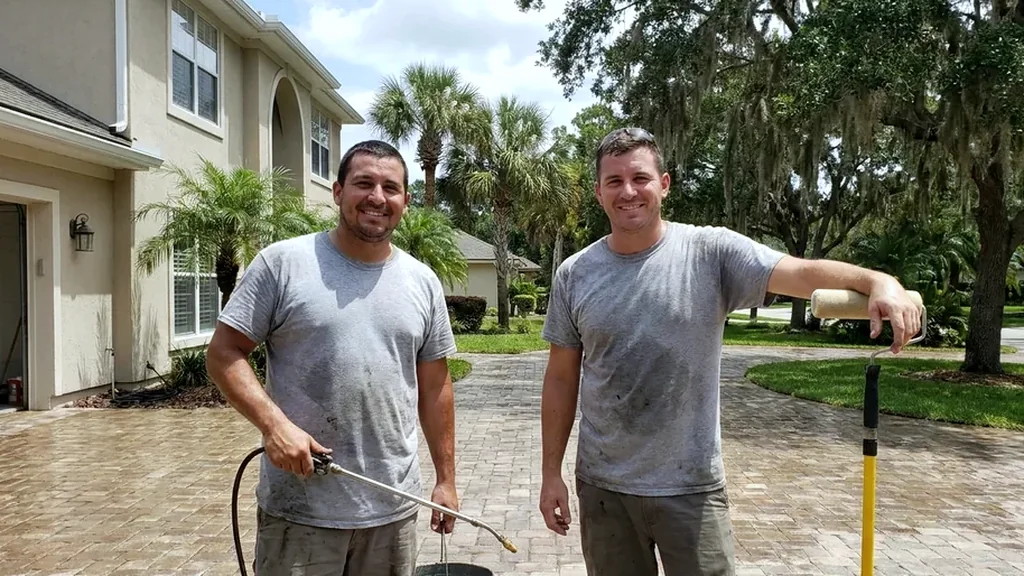
Spray comes first and a roller follows, which evens out the coat. Expect 2 to 4 hours before feet and 24 hours before cars, though weather can change that. Two to five years between coats is typical, and the date of the job is worth keeping. Patio pots and chairs wait until the coat has cured. Have the sealer brand and coat count noted on the quote.
Complete paver services in New Town
New Town pavers get four things in order: stains treated, stones washed, joints refilled and the coat applied. Sealing locks in whatever is underneath, so the earlier steps matter. A porch walk and a long driveway follow the same order, though on different schedules. To learn how your own job would unfold, call (904) 664-0041.
Driveways carry hot rubber and road grime, and the sun hits them all day. Porch walks and steps take feet and shade, and narrow side strips collect mildew. Each surface wears its own way, so each can get its own finish. Mention every surface when you get a free estimate.
Film-forming sealer gives the wet look and is redone every 3 to 5 years. Penetrating sealer keeps a natural look and lasts roughly 5 to 7, one company says. Water-based sealer cannot go over solvent-based sealer, so an old coat matters. Call (904) 664-0041 to talk through the choice for your pavers.
Most of the year's rain falls from May to September, while November to April stays driest. A contractor may favor spring or fall for stable weather, and will skip any day with a downpour in the forecast. Cars stay off about a day after sealing. To find a date, get a free estimate.
Questions to ask before you hire
- Will sealing make my pavers darker, and is there a finish that keeps them light?
- What do you do about the white powder that keeps coming up through my pavers?
- Do I need to be home while you work?
- If it rains the night after you seal, what happens to the coat?
- Can you get the dark leaf stains from my oak trees out before you seal?
- If the sealer starts to flake in a few months, who do I call?
- Will you clear the weeds and ant hills out of the joints first?
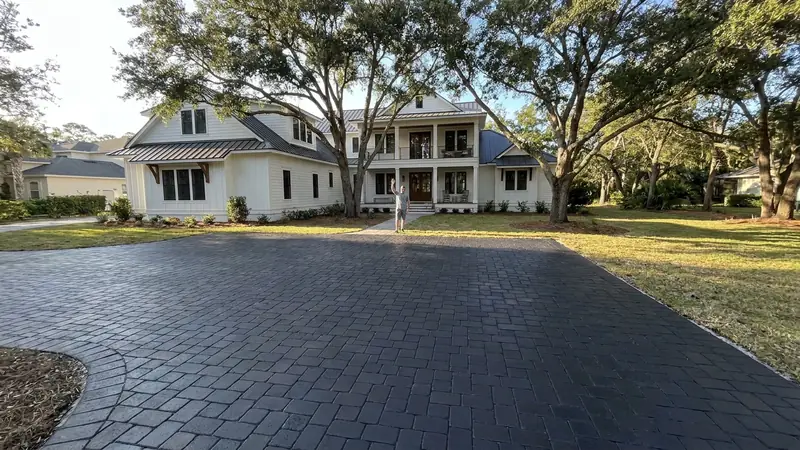
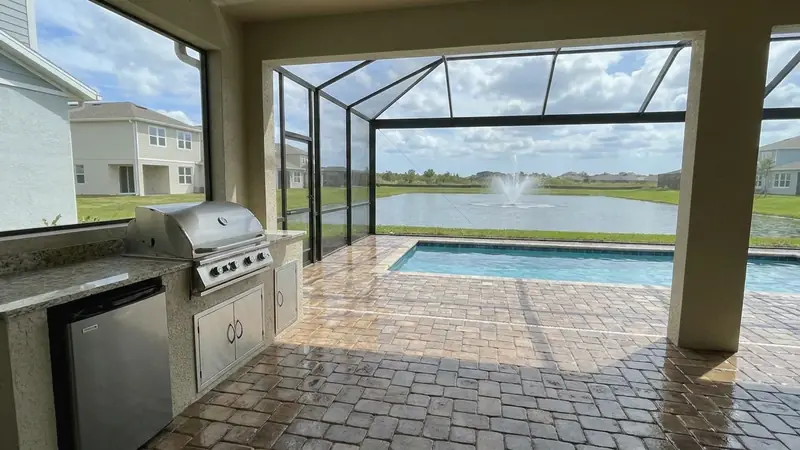
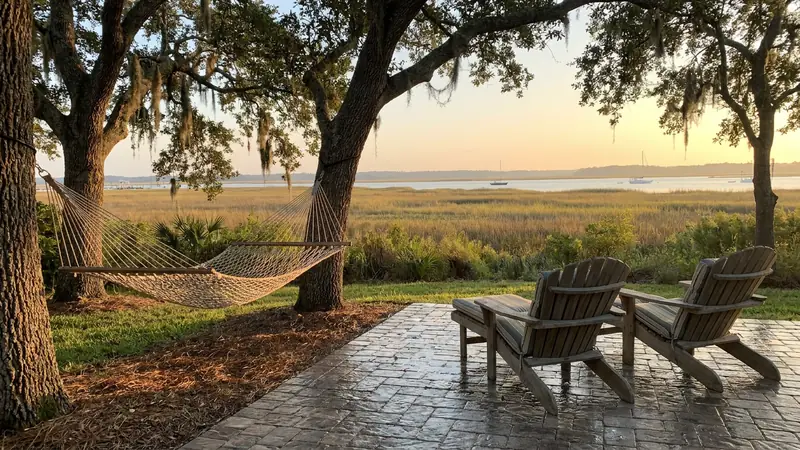
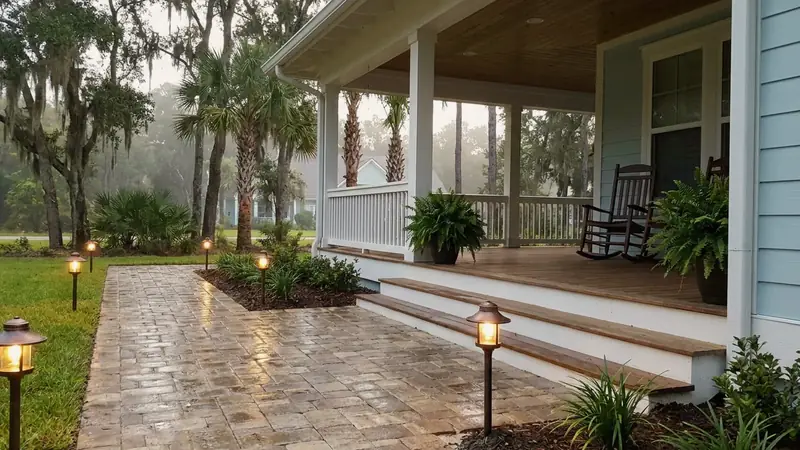
What do sealed pavers look like around New Town?
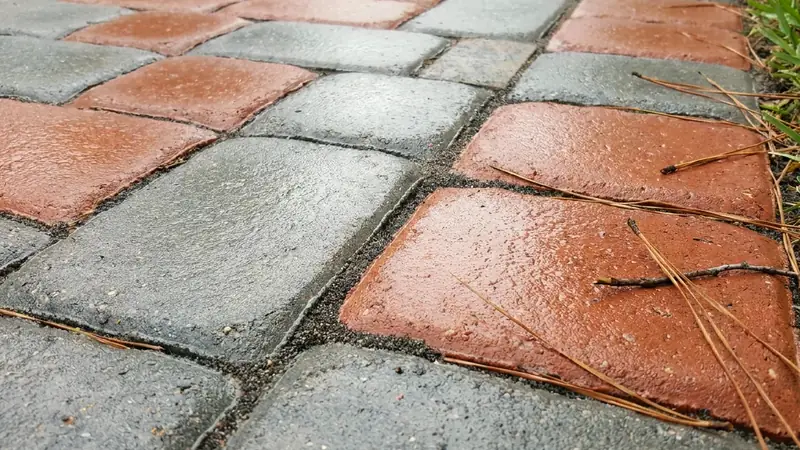
Why local matters in New Town
Someone who works New Town knows the blocks run from porch-front shotgun houses to 1940s brick and newer infill. That range means coats, sand and surface age differ from one block to the next. A good first question is how old the pavers are. Call (904) 664-0041 to reach a contractor who works close to Downtown Jacksonville.
Local knowledge also covers the traffic. Kings Road is the main route through the neighborhood, and industrial yards sit on three sides, and one edge borders CSX's Moncrief Yard. A contractor aware of that may plan a longer wash for a driveway on a busy street. You can get a free estimate and mention how busy your street is.
Summer rain comes in short, hard bursts, and the sandy ground drains fast. A local contractor waits for dry stone and for stable weather, which in Jacksonville often means spring or fall. To learn how a sealing day would run on your block, get a free estimate.
Is New Town an old Jacksonville neighborhood or a new one?
Old, despite the name. It developed in the early 20th century for African-American workers in nearby railroad and industrial jobs, and a streetcar line on Kings Road reached Mason Park in 1904. Kings Road itself was built between 1771 and 1775, and it remains the main route through the neighborhood. If you live along it, get a free estimate.
Edward Waters College, which Wikipedia calls Florida's oldest historically Black college, built Centennial Hall on Kings Road in 1916. The college maintains Success Park, a nearly 2-acre park and playground at 3rd and Pearce Streets. The S-Line, once a CSX rail corridor, is being turned into a trail, and a 4.3-mile segment is partly built. Close to the college, Kings Road or the S-Line, call (904) 664-0041 and name your street.
Frequently Asked Questions
Why is paver sealing so expensive in New Town?
Prep is most of the cost. Smaller jobs pay more per square foot because prep does not shrink with the surface, and locked gates and tight side yards add time. Oil stains and lost joint sand mean more work ahead of the coat.
Which water-based sealer should I use on New Town pavers?
It depends on the surface and the look. Check what is on the surface first, because water-based sealer cannot go over solvent-based sealer. Film-forming products give the wet look, and penetrating ones keep a natural look. Ask for the product name and write it down for later. A contractor can show you both finishes if you ask.
How much does it cost to re-sand and seal pavers in New Town?
Safe Touch puts a typical First Coast job at $1.75 to $3.25 per square foot. A failed old coat costs extra to strip. Make sure the quote lists the total area, for a fair comparison. Bigger jobs, such as a drive plus a walk, earn a better rate per square foot.
How long does paver sealing last in New Town?
Expect somewhere from two to five years before the coat needs redoing, and sun can shorten that. A Jacksonville guide puts film-forming sealers at 3 to 5 years and penetrating ones at roughly 5 to 7, with full-sun driveways resealed about every 18 to 24 months. Water that soaks in fast means the coat is worn. A splash of water each spring tells you where yours stands, and resealing before the stones are bare helps hold the color.
What is the difference between penetrating and film-forming sealer?
Film-forming sealer sits on top and gives the wet look, and it costs more. Penetrating sealer soaks in, costs less up front and does not last as long. A Jacksonville cost guide lays out that trade, and adds that a film-forming sealer can trap moisture and turn slick, which is why pool decks often get a penetrating one. The contractor can show you both finishes. Ask which type your last coat was, since that affects the next one.
When is a good time of year to seal pavers in New Town?
Spring and fall often bring the steadiest weather for sealing, a local company notes. Rain is heaviest from May to September, so a dry week in summer also works. The stone has to be dry, and the contractor waits for it. If your window falls in summer, the contractor will watch for a dry stretch. Booking early in the season leaves room for a weather delay.
How do I know my New Town driveway is ready for sealing?
Flat or chalky color, low joints, dark mildew in shaded strips and weeds along the edges are the signs a local company lists. If water soaks in instead of beading, that counts too. A free look costs nothing and settles it.
How long before I can park on my driveway after sealing?
Feet can return within a few hours, and cars after about a day. One company asks for 2 to 4 hours before foot traffic and 24 hours before cars, and wet weather can stretch both. Parking on the street or in the garage overnight makes this easy.
Ready for a Free Estimate in New Town?
Call (904) 664-0041 and tell us about your pavers.
Free, no obligation