
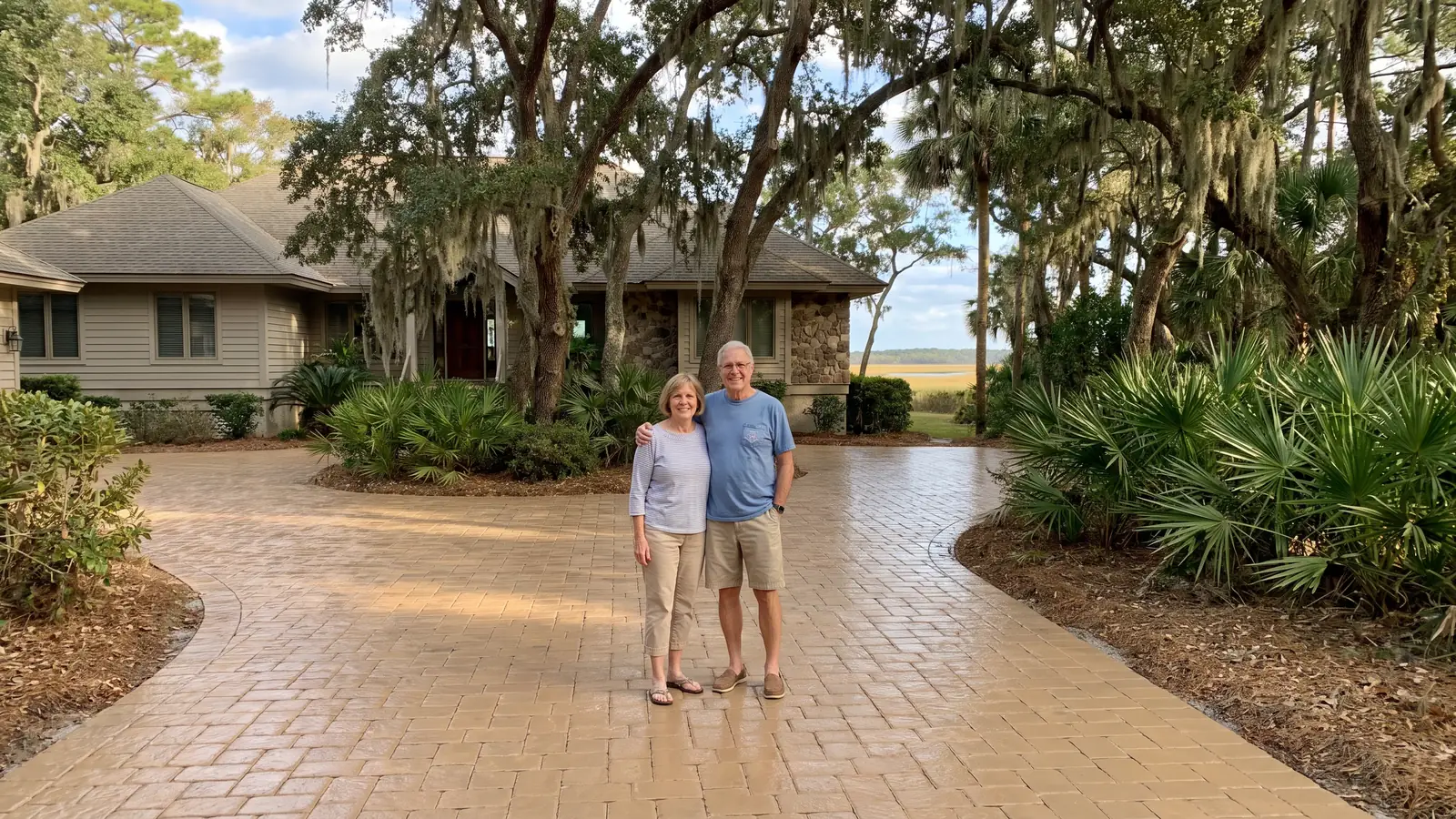
Paver sealing for Atlantic Beach homes
Paver Sealing in Atlantic Beach, FL
Salt, creek water and afternoon storms all reach Atlantic Beach pavers; call (904) 664-0041 for a free sealing estimate.
- Brings out deeper paver color
- Fresh joint sand helps lock pavers in place
- Gives weeds less room to grow
- Makes the surface easier to keep clean
- Free estimate, no obligation
Request a Free Estimate
Free, no obligation.
Fast, careful paver sealing in Atlantic Beach
Paver sealing is available across Atlantic Beach, from the streets near Donner Park to the Seminole Road side of town. A local contractor will wash, re-sand and seal your driveway, walks, pool deck and patio, and the estimate is free. Use the link to get a free estimate, and a reply should reach you within 1 business day, usually much sooner.
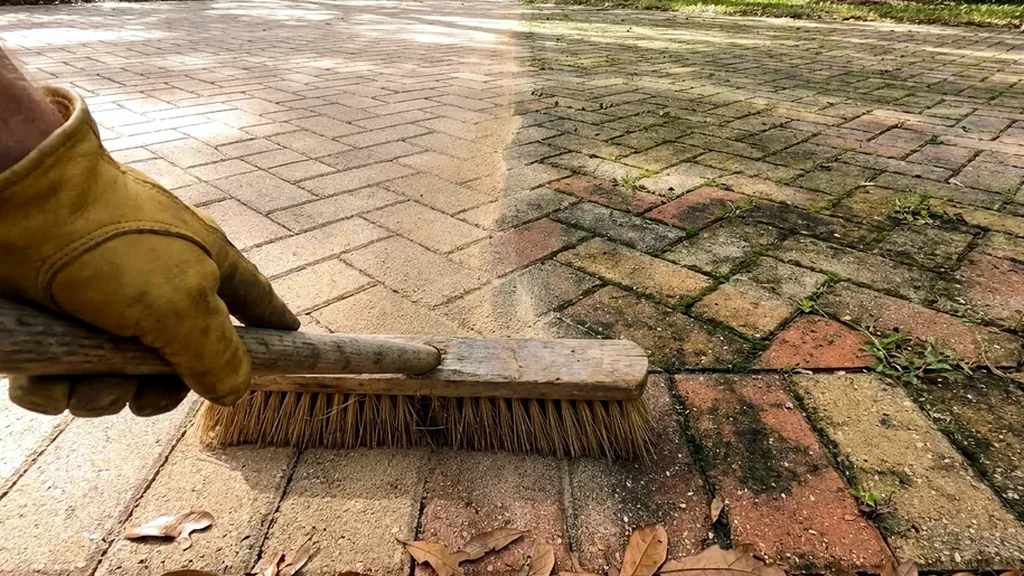
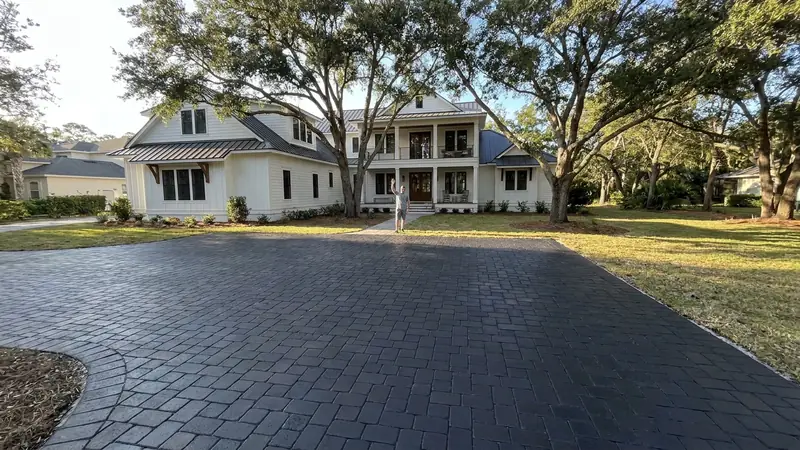
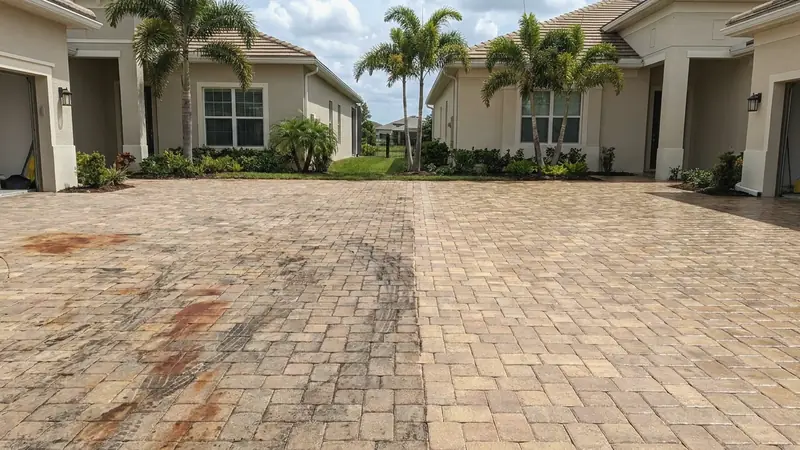
Picture a driveway gone gray and blotchy, with a gritty film from the sea air and weeds in the joints. After a wash, fresh sand and a new coat, the same pavers read as one even color again. If you want to talk first, call (904) 664-0041 and describe what you see on your surface.
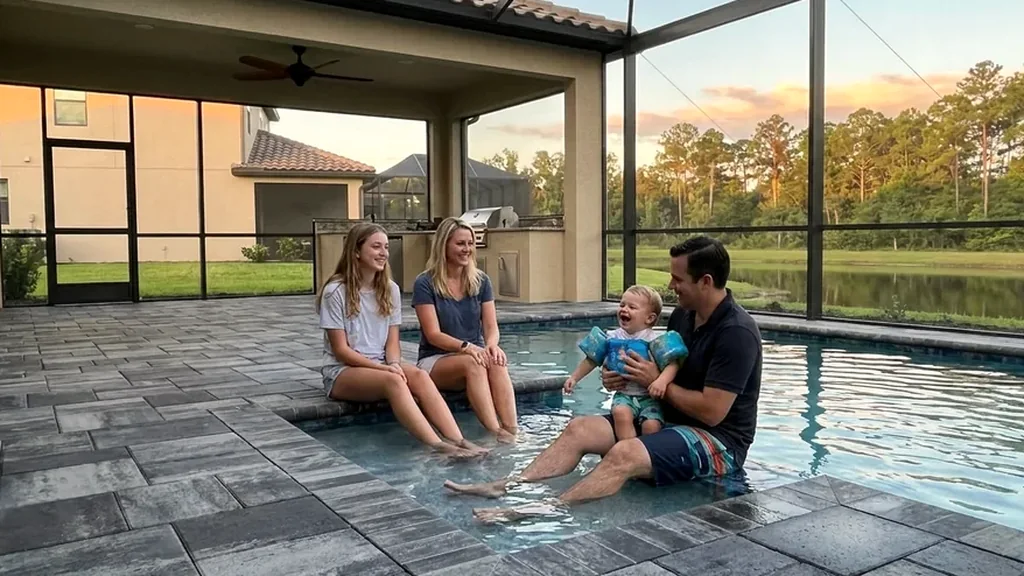
Why hire a local paver sealing contractor in Atlantic Beach?
Atlantic Beach homeowners tend to hire a local paver contractor because wind, salt and sudden storms all land on one small coastal city. To hear what that means on your street, get a free estimate.
Look first, pay later
A contractor walks your Atlantic Beach lot and names a price before anything starts. Saying no is always fine.
Published numbers
Around Northeast Florida, posted prices run $1.75 to $3.25 per square foot for the full wash, sand and seal.
Pick the sheen
Matte reads quiet beside a beach cottage. Gloss pops, but it shows scuffs earlier where tires roll.
Your call
The date, the finish and the yes are yours. An estimate here never binds you.
Get Your Free Estimate in Atlantic Beach
Tell us about your pavers in Atlantic Beach.
Free, no obligation
What paver problems show up most in Atlantic Beach?
Storms that ride in on the sea breeze
An Action News Jax weather blog says the June through September wet season averages 28.81 inches of rain and is driven by a nearly daily sea breeze. On a beach-side lot, that means sudden storms that wash across a driveway and pull sand out of the joints. Open joints let weeds and ants in, which means fresh sand has to go back before any coat. Sealer also needs a dry surface, so the job gets timed around those afternoons. One Jacksonville company says sealer turns cloudy white when it goes onto damp pavers, which is another reason a dry forecast matters. The wet season, June through September, brings more than half of the year's rain, so a summer date has to leave room for a rain day. Booking in the drier months, November through April, gives a crew more clear days to work with.
Salt and sand carried by the wind
Nicolock, a paver maker, says salt travels through the air as tiny particles and can crystallize on surfaces as moisture evaporates. It adds that light surfaces show salt residue and sand more quickly. An Atlantic Beach driveway near the ocean or the marsh can pick up that film. Sealer is not a force field, but sealed surfaces rinse off more easily than bare ones, according to one Jacksonville company. That is why a wash is the first stage of every job here, and why a bright, light color shows the film sooner than a darker one. A blended neutral tone, Nicolock adds, often holds up better visually, which is worth remembering if you ever replace any pavers.
Damp low ground near the creeks
The city calls Aquatic Gardens a neighborhood with significant and repeated flooding, and its planner expects some sunny-day flooding there and along Sherman Creek. Pavers that stay damp and shaded are where moss and algae take hold. If your walkway sits low or never gets full sun, expect green film to start there first. Washing comes before sealing, because sealer would lock that film in place. The Aquatic Gardens stormwater project is built for a 25-year storm, which means bigger events can still leave water on low driveways. The city paid for that stormwater work with state and federal FEMA grants. Its planner also said the city modeled sunny-day flooding 25, 50 and 100 years out, so low ground is a long-term fact of life here.
Pavers added in different years
Royal Palms has 186 homes built from 1960 to 2023, with a median year of 1971. Pavers around houses of that range were likely added by different owners at different times. A past owner may have used a product nobody wrote down. That matters because a water-based sealer cannot go over a solvent-based one, so the contractor identifies the old coat first. Ask the contractor to test a small spot if nobody remembers who sealed the pavers last. The city counts 6,537 housing units, so there is a lot of pavement to look after, and a job on one street rarely looks like a job on the next.
Roots from protected trees
In July 2026 Atlantic Beach passed tighter tree rules after a live oak described as 200 years old was cut down. Maritime forest trees 20 inches or wider now carry more weight. Roots can lift a section of walkway, and sealing locks in whatever is there, so a lifted spot is reset first. Check with the city before any work on a large tree. A contractor can reset the pavers around a root, but the tree decision belongs to you and the city. Johansen Park, Donner Park and Tide Views Preserve all add tree and marsh cover close to homes, so shade is part of daily life here.
Does a Royal Palms driveway need different care than one near Donner Park?
Often yes, because the neighborhoods grew in different decades. Royal Palms has 186 homes built from 1960 to 2023, with a median year of 1971, so a driveway there may have seen several owners and several coats. Name your street when you get a free estimate, and the contractor can plan for the age of the lot.
The old Selva Marina Country Club opened in 1958. Its site is now Atlantic Beach Country Club, with 178 homesites and a course that reopened in January 2015, so pavers there are likely newer than most in town. Seminole Beach joined the city in 1987, which means homes on that north side can differ again. Call (904) 664-0041 if you are unsure how old your pavers are.
Atlantic Beach counts patios, porches and driveways as impervious area, and its FAQ sends driveway questions to the Building Department. Sealing pavers you already have adds no new surface, so it is a separate question from building more. If you are weighing a bigger patio, ask the city first, then get a free estimate to price the sealing on what you keep.
What does paver sealing cost in Atlantic Beach?
Think of the price as area times prep. A bigger lot costs more in total, and heavy salt film or old sealer pushes the rate up. Companies around Northeast Florida post $1.75 to $3.25 per square foot, and Atlantic Beach jobs should sit inside that band. To see where your pavers land, get a free estimate.
Small courtyards cost more per foot because setup stays the same. Long open drives go faster. Failed sealer that must be stripped adds a step, and so does a lot where gear is carried in by hand. Call (904) 664-0041, and the contractor will say which of these you face.
| Paved area | Typical example | Clean, sand and seal |
|---|---|---|
| 300 sq ft | Small patio or walkway | $525 to $975 |
| 600 sq ft | Two car driveway | $1,050 to $1,950 |
| 1,000 sq ft | Large driveway or pool deck | $1,750 to $3,250 |
| 1,500 sq ft | Driveway plus pool deck | $2,625 to $4,875 |
Math based on the $1.75 to $3.25 per square foot that Northeast Florida paver companies published as of November 2026. Your contractor sets the actual price after seeing the surface. Repairs, leveling and stripping failed sealer are usually extra.
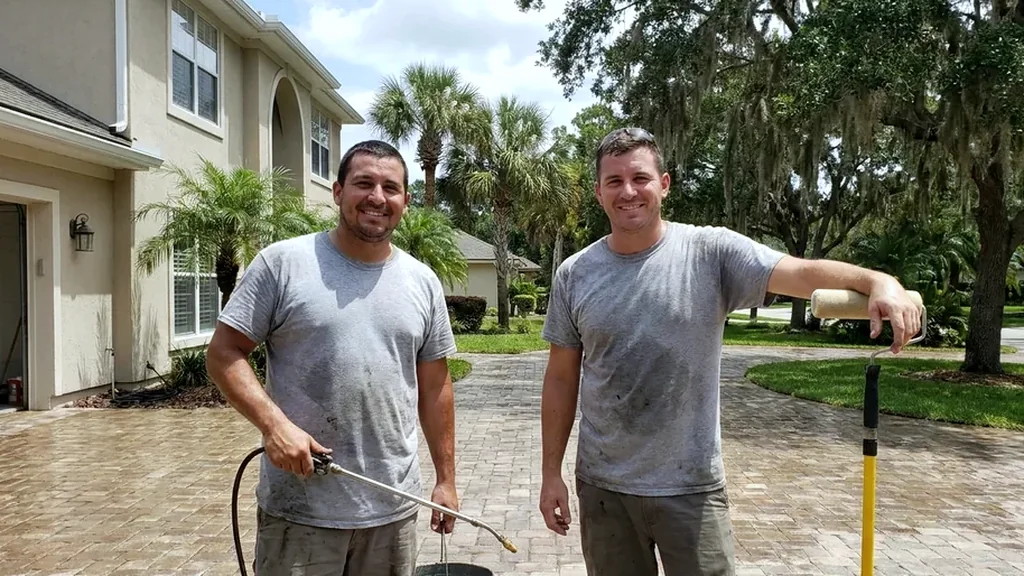
How does a paver sealing job work in Atlantic Beach?
Look at the lot
Before anything else, the contractor looks at how water leaves your property. Low corners and shaded stretches get noted. Any dip or lifted edge is marked, because sealer would hold it in place. If the surface was coated before, the contractor works out what that coat was, since water-based sealer cannot go over solvent-based. Photos from your phone help the contractor plan before arriving.
Rinse away the coast
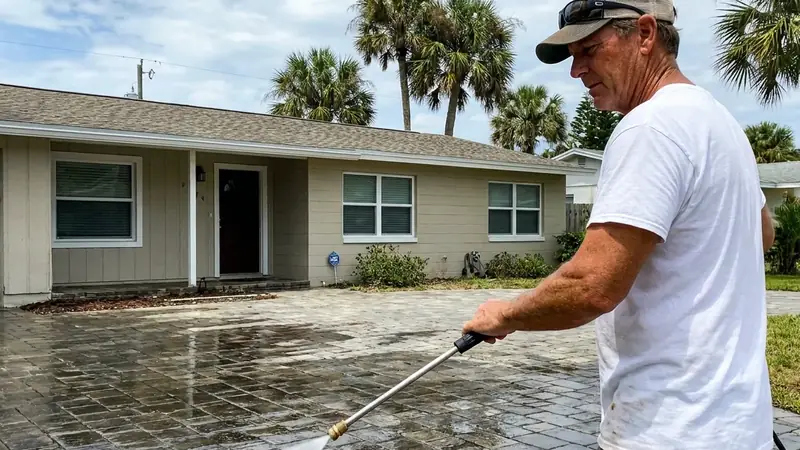
Next comes the wash. It takes off the gray film that salt air leaves, plus green growth and rubber marks. Oil and rust spots are treated on their own before the wash. Plants, siding and the pool stay out of the spray path, so nothing downhill picks up the runoff. Heavier film may take a second pass, which the contractor tells you about before moving on.
Refill every gap
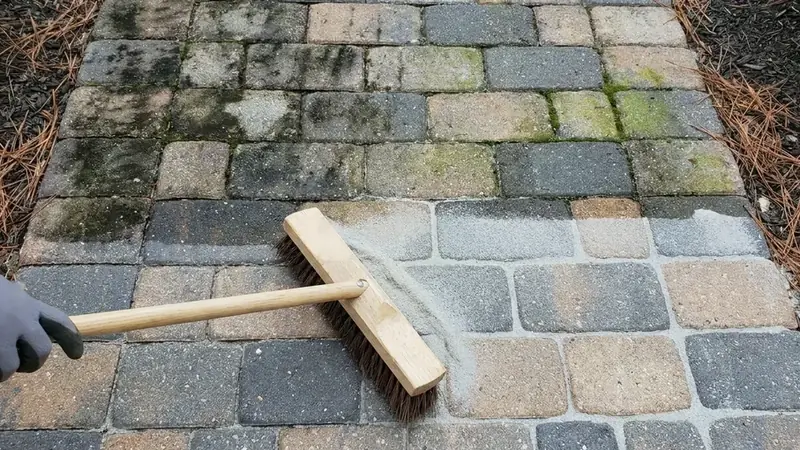
Wash water carries sand out of the joints. The contractor sweeps fresh sand in until each joint is full, then clears the surface. Coastal storms scour unsealed joints fast, so this step does real work. A drive with joints open for years takes longer. A last sweep shows any joint that still needs sand.
Give it time to dry
Nothing goes on until the surface is dry. In the wet season a sea breeze can bring rain most afternoons, so the contractor reads the forecast closely. A shaded walk near the marsh may need extra hours. If the pavers still look dark, the job waits a day. If the forecast shows rain, the contractor keeps the date open and moves the job.
Roll on the finish
Sealer is sprayed, then rolled in so it settles into the joints. Matte keeps a natural look, while wet look adds depth. Plan on two to five years before the next coat, the span local quotes commonly cover. You can usually walk on it that afternoon, and cars wait about a day. Ask when you can put furniture back and when cars can return to the drive.
Complete paver services in Atlantic Beach
Start to finish, a job here takes four moves: wash, refill, dry, seal. The wash strips salt film and green growth. New sand fills the joints before any coating touches the surface, so nothing dirty ends up trapped underneath. For the timing of each move on your lot, call (904) 664-0041.
Each surface ages its own way. Drives collect tire scuffs and sprinkler spray, pool decks collect furniture marks, and walks near the marsh stay damp. Tight courtyards behind older homes mean gear gets carried in by hand. When you get a free estimate, list the surfaces you want done.
Two choices shape the finish: water-based or solvent-based, matte or wet look. A past solvent-based coat blocks a water-based product, so the old coat has the first word. Matte hides scuffs better and suits a beach cottage. To talk through your own pick, call (904) 664-0041.
Rain sets the calendar. Jacksonville's driest months, November through April, give a crew the most open days, and spring and fall often bring stable weather, according to one local company. Summer sea breeze storms can bump a date. To find a window that fits your street, get a free estimate.
Questions to ask before you hire
- Can you get the dark leaf stains from my oak trees out before you seal?
- Will sealing make my pavers darker, and is there a finish that keeps them light?
- Do you take a card, and is anything due before the work begins?
- Will the sealer make my pool deck slick when it gets wet?
- If it rains the night after you seal, what happens to the coat?
- Will you clear the weeds and ant hills out of the joints first?
- Is the wash, the new joint sand and lifting any low pavers part of your price?
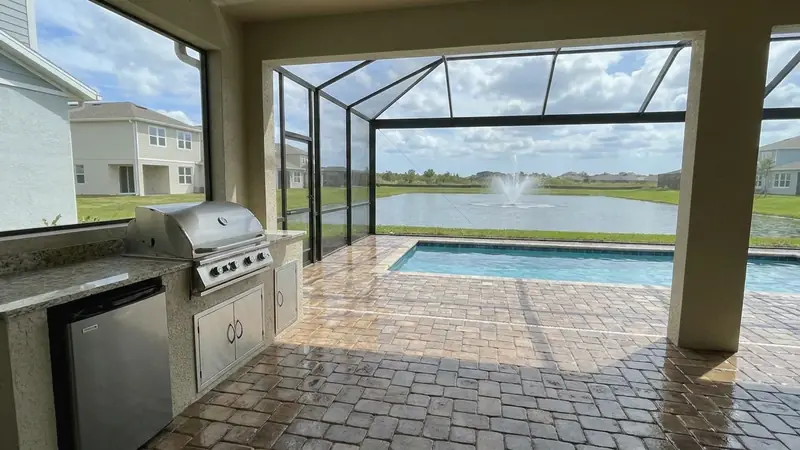
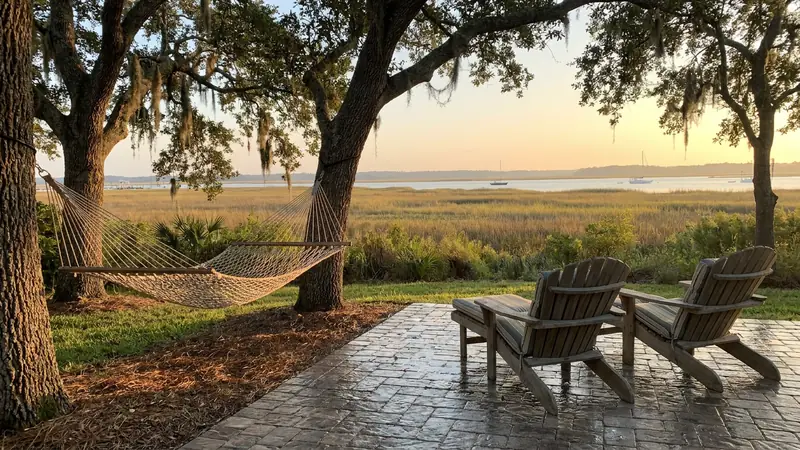
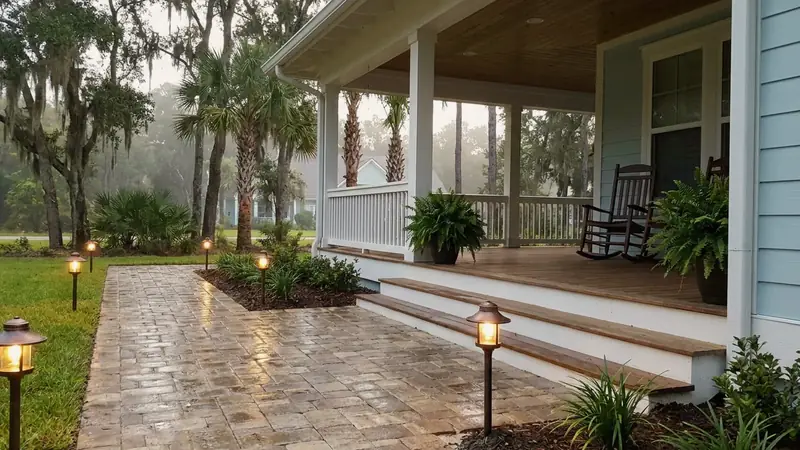
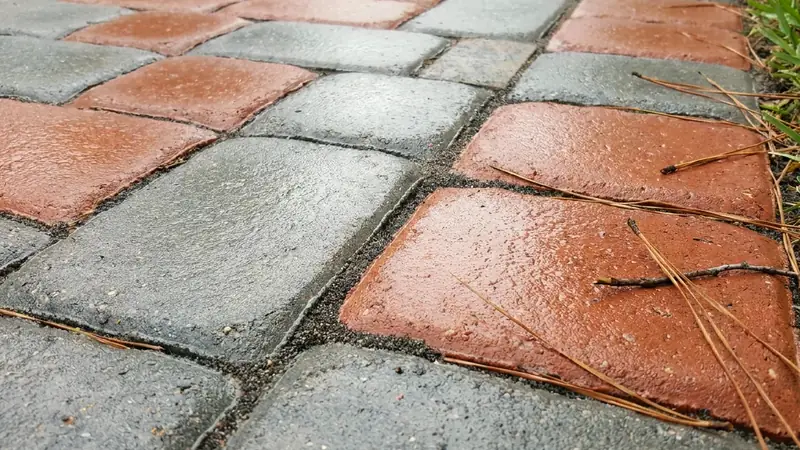
What do sealed pavers look like around Atlantic Beach?
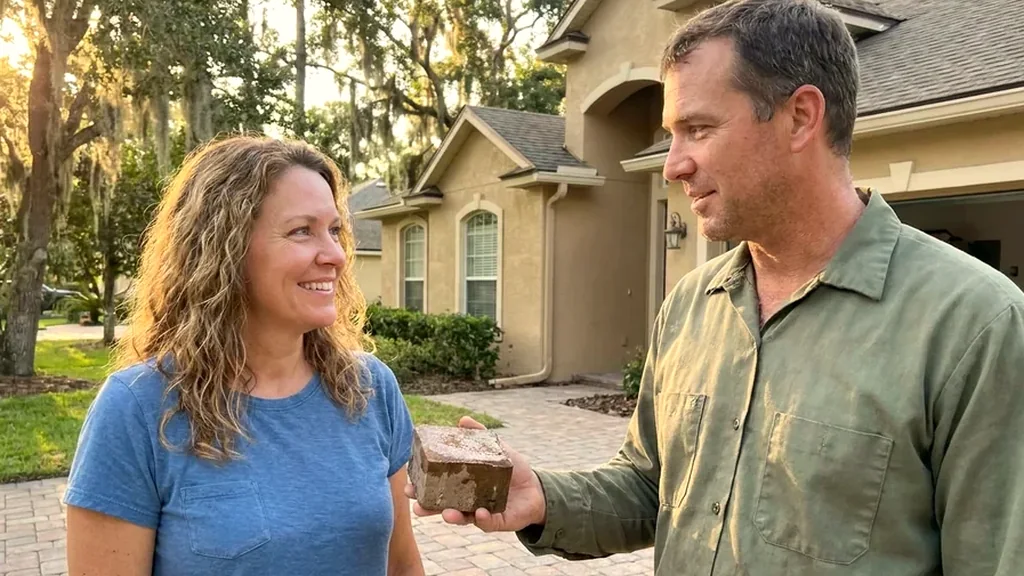
Why local matters in Atlantic Beach
Atlantic Beach sits between the ocean and the Intracoastal Waterway, and water shows up from both sides. A contractor who works here asks where your yard stays wet and where the sprinklers land. Those answers shape the whole job. If you want that kind of local planning, call (904) 664-0041.
Weather runs the schedule here. Summer storms follow the sea breeze, and the driest stretch is November through April. A local crew keeps a spare date for rain days instead of forcing a coat onto damp pavers. To hear how that works, get a free estimate.
Mature oaks, which the city now guards more closely, shade many lots. Roots lift edges and leaves stain surfaces. A contractor nearby spots both at the first visit and keeps rinse water clear of trunks. If a big oak stands over your drive, get a free estimate and mention it.
What should a contractor know about Atlantic Beach before sealing here?
Mostly that the city grew along a railroad and a road. Henry Flagler built the Mayport branch of the railroad in 1900, Atlantic Boulevard was completed in 1910, and the town incorporated in 1926. Naval Station Mayport has been in use since December 1942 and sits just up the road. If you live near Atlantic Boulevard, get a free estimate and share your cross street.
Green space shapes the picture too. Donner Park and Johansen Park sit inland, while Tide Views Preserve looks over the Intracoastal Waterway, and Kathryn Abbey Hanna Park nearby covers 447 acres of coastal hammock. The median age here is 47.9, which fits the older homes and settled streets. Near any of these Atlantic Beach landmarks, call (904) 664-0041 and name your street.
Frequently Asked Questions
Why is paver sealing so expensive in Atlantic Beach?
Because prep takes the time. Washing, new sand, repairs and stripping old coats add up, and small jobs cost more per square foot. Posted prices around Northeast Florida run $1.75 to $3.25 per square foot, so check any Atlantic Beach bid against that range. Ask for the total area in writing, then divide to compare bids.
What is a good water-based paver sealer for an Atlantic Beach home?
No single product wins everywhere. Water-based sealer cannot cover a solvent-based coat, so the first job is learning what is on your pavers now. Once the contractor names the product, save the name for later coats. Ask the contractor how the product handles sun and salt spray near the beach.
How long does paver sealing last in Atlantic Beach?
Most quotes cover two to five years per coat. Sun, salt and daily tires pull that number down. One local company suggests a water test: beading means the coat holds, and soaking in means it is spent. Pale pavers show wear and film sooner near the coast, so look them over each spring.
How do you sand and seal pavers in Atlantic Beach?
A contractor washes, lets the surface dry, brushes sand into the joints and then seals, so nothing dirty gets locked under the coat. One local company says pros spray the product and then roll it in to reach the joints. Ask the contractor to walk you through each stage for your surface before work begins.
Can salt air damage pavers in Atlantic Beach?
Over time it can wear softer materials. Paver maker Nicolock says salt crystallizes as moisture dries and may wear lower-density materials, and that pale pavers show residue sooner. A blended neutral tone, Nicolock adds, often looks better under those conditions. Light colors show it first, so pick a tone with that in mind if you replace any pavers.
Do I need city approval to seal pavers in Atlantic Beach?
For sealing alone, probably not, though the city's pages do not say. Its FAQ points new residential driveway work to the Building Department and counts patios and driveways as impervious area. A short call before you book settles it. Condo and HOA owners should also check their own rules, since those can be stricter than the city's.
What time of year suits paver sealing in Atlantic Beach?
Dry weather matters most. One local company says spring and fall often bring the steadiest conditions, though a clear winter stretch works too. Jacksonville's driest months run November through April, and summer sea breeze storms can bump a date. A clear stretch in winter works too, so you do not have to wait for spring.
Will sealing fix sunken pavers in my Atlantic Beach driveway?
No. Dips and lifted edges are reset before any coat, because sealing holds whatever is there. Show the contractor low spots and loose edges at the first visit, and expect repair to add time. Repairs add time to the job, so mention them when you book.
Ready for a Free Estimate in Atlantic Beach?
Call (904) 664-0041 and tell us about your pavers.
Free, no obligation