
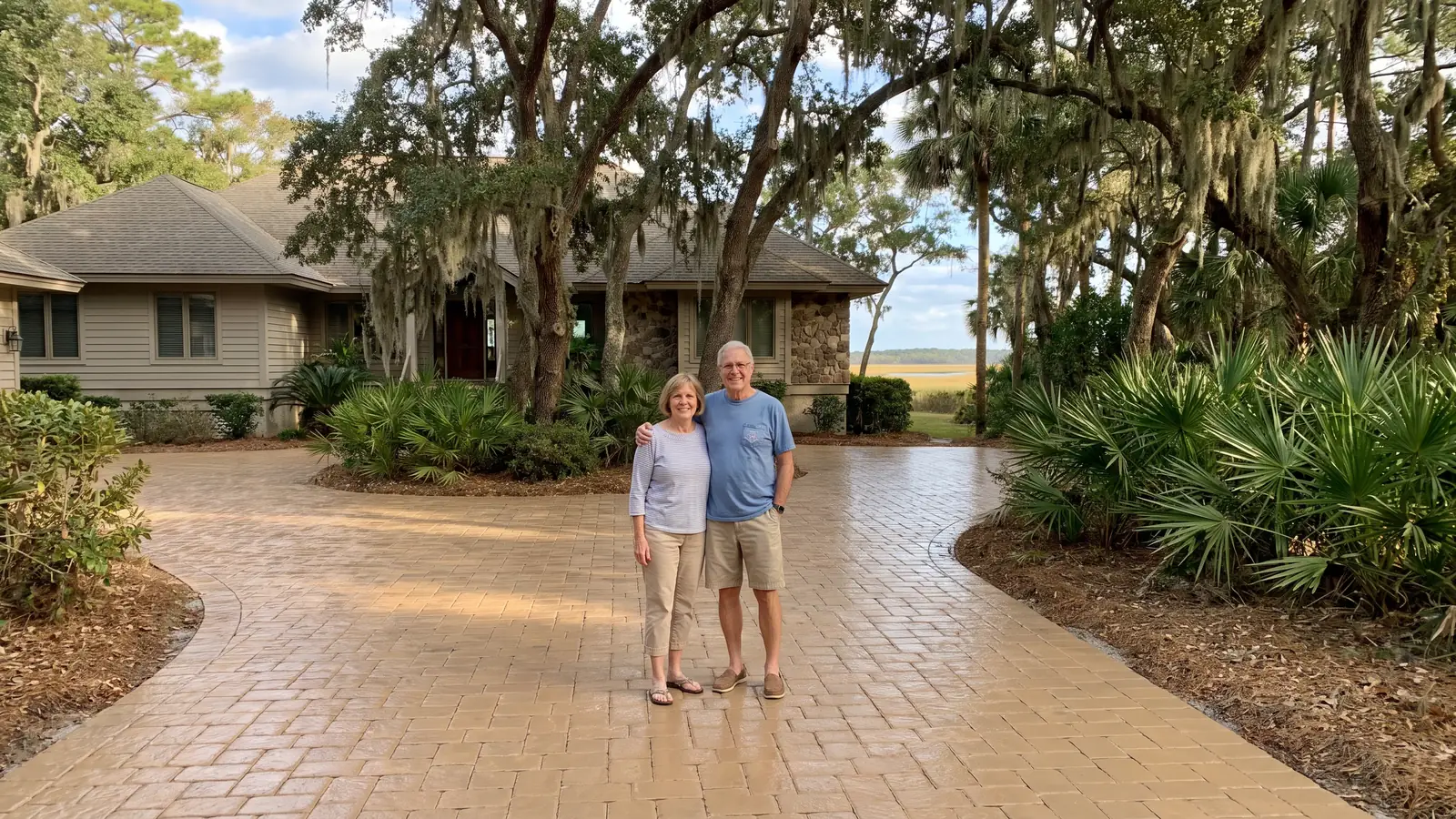
Paver sealing for Jacksonville Beach homes
Paver Sealing in Jacksonville Beach, FL
Three blocks from the Atlantic, Jacksonville Beach pavers fight salt and rain, so call (904) 664-0041 for a free estimate.
- Brings out deeper paver color
- Fresh joint sand helps lock pavers in place
- Gives weeds less room to grow
- Makes the surface easier to keep clean
- Free estimate, no obligation
Request a Free Estimate
Free, no obligation.
Fast, careful paver sealing in Jacksonville Beach
Paver sealing in Jacksonville Beach is a free estimate away, for driveways, pool decks and walkways. Cleaning, fresh joint sand and a coat of sealer all come from a local contractor. A call to (904) 664-0041 gets you an answer within 1 business day, usually much sooner.
Maybe the apron where your driveway meets the street has gone gray and gappy, and the pool deck feels chalky under bare feet. After a wash, new sand and a coat, those same pavers sit tight and one color again. If you would rather write than call, you can get a free estimate and there is no obligation.
Why hire a local paver sealing contractor in Jacksonville Beach?
Owners in Jacksonville Beach hire locally since the ocean sits close and the city has its own paver rules. To talk through your driveway, call (904) 664-0041.
A free walk around
A free walk around your Jacksonville Beach driveway, deck or walk comes first, then a price you can accept or decline.
A number to measure against
Hold a Jacksonville Beach bid up to the usual published range: $1.75 to $3.25 per square foot for cleaning, sanding and sealing.
Grip by the pool
An anti-slip additive belongs on any pool deck. Near water, matte is the common pick, and a wet look suits the driveway.
Your date, your call
You pick the day, the finish and whether to proceed. A Jacksonville Beach estimate carries no obligation.
Get Your Free Estimate in Jacksonville Beach
Tell us about your pavers in Jacksonville Beach.
Free, no obligation
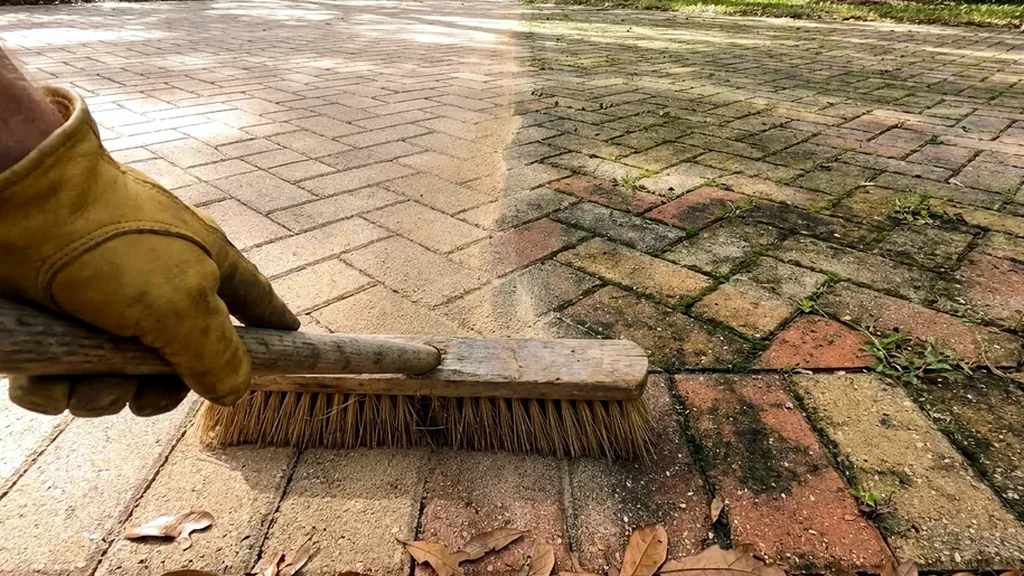
What paver problems show up most in Jacksonville Beach?
Salt that crystallizes on the surface
Salt rides the air as tiny particles. A paver maker explains that it crystallizes on a surface as moisture dries and can wear lower-density material over time. In Jacksonville Beach, where some driveways sit three blocks from the ocean, that shows up as a dull film and rough patches. Clean pavers take a coat better, which means the wash comes first. Salt marks are easiest to rinse before they bake in, so a hose-down now and then between coats keeps the finish looking fresh.
Water over the dunes
In 2016 Hurricane Matthew sent water over the dunes and inland to at least 2nd Street. After that kind of flood, pavers hold silt and the joints lose sand. Sealer would lock the silt under it, so the contractor washes first and refills the joints. Local news said the water came inland at least that far. A driveway a few blocks from the sand can still need a flood-aware plan. Mention any low spot where water collects when the contractor first visits. Water that sits there is the same water that carries joint sand toward the street, so those edges often need the most refilling.
A tired apron at the curb
The strip where a driveway meets the street takes the most turning tires and the most settling. A Jacksonville contractor says a sunken apron is fixed before sealing, because a coat just preserves a dip. Settling shows up as puddles after rain and as a lip where the pavers meet the concrete road edge. Many Jacksonville Beach owners also use city right-of-way there, so it helps to know who owns that strip. If the pavers stop at your property line, the job is simple. If they run past it, ask the city before you plan any change.
Cloudy sealer in sticky air
June, August and September each average between about 6.8 and 7.5 inches of rain at the beach. A Jacksonville paver company says sealer that turns white nearly always traces to damp pavers or a coat laid on too thick. Humid air slows drying, which means a good contractor waits for a dry surface rather than racing the clock. A day of patience costs less than stripping a cloudy coat and starting over, and it keeps the finish even.
A slick pool deck
Glossy sealer without an anti-slip additive is slippery when wet, and a pool deck gets wet often. A Jacksonville paver company calls the additive non-negotiable on decks, whatever the finish. Matte is the usual finish near water. Ask for the additive by name so it is in the quote. Bare feet, wet towels and pool toys all go across the same surface every day, so grip should be settled before the finish is.
Does the city's right-of-way rule matter for my Jacksonville Beach paver apron?
Who owns the strip where your Jacksonville Beach apron meets the street?
It can, because many Jacksonville Beach owners use the city's right-of-way beside their homes, and most of that use needs a revocable encroachment permit. That permit says the city may take the property back at any time. If your pavers run out to the street, call (904) 664-0041 and ask which part is yours.
What changed for paver driveways in October 2023?
The city also updated its standards for paver driveways in October 2023, according to its own FAQ page. The page does not mention sealing, so city staff are the right people to ask if you are unsure. Once you know what applies to your lot, you can get a free estimate.
Do Morgan mid-century homes and Art Moderne landmarks need different paver care?
The housing mix here is wide. Beach Boulevard ends at A1A three blocks from the ocean. The city has Mission-style and Art Moderne landmarks, plus mid-century modern homes designed by William Morgan. A contractor who sees your street can plan for stone, brick-style pavers or both, so get a free estimate and say what the house looks like.
What does paver sealing cost in Jacksonville Beach?
Why does salt film change a Jacksonville Beach quote?
You will see $1.75 to $3.25 per square foot listed around Northeast Florida for a clean, sand and seal. In Jacksonville Beach, the swing inside that range comes from salt film, lost joint sand and any strip of apron that needs resetting. For a figure tied to your own driveway, get a free estimate, and the estimate is free. The quote spells out the square footage, so you can see how the total was built.
Do narrow side yards and gated entries cost more to seal?
Pool decks need an anti-slip additive, which is part of the product choice and the bid. A failed old coat that has to come off costs more than a straight clean, sand and seal. Narrow side yards and gated entries add prep time too, since crews haul in gear by hand. On a call to (904) 664-0041, you can learn which of these is likely on your lot.
| Paved area | Typical example | Clean, sand and seal |
|---|---|---|
| 300 sq ft | Small patio or walkway | $525 to $975 |
| 600 sq ft | Two car driveway | $1,050 to $1,950 |
| 1,000 sq ft | Large driveway or pool deck | $1,750 to $3,250 |
| 1,500 sq ft | Driveway plus pool deck | $2,625 to $4,875 |
Math based on the $1.75 to $3.25 per square foot that Northeast Florida paver companies published as of November 2026. Your contractor sets the actual price after seeing the surface. Repairs, leveling and stripping failed sealer are usually extra.
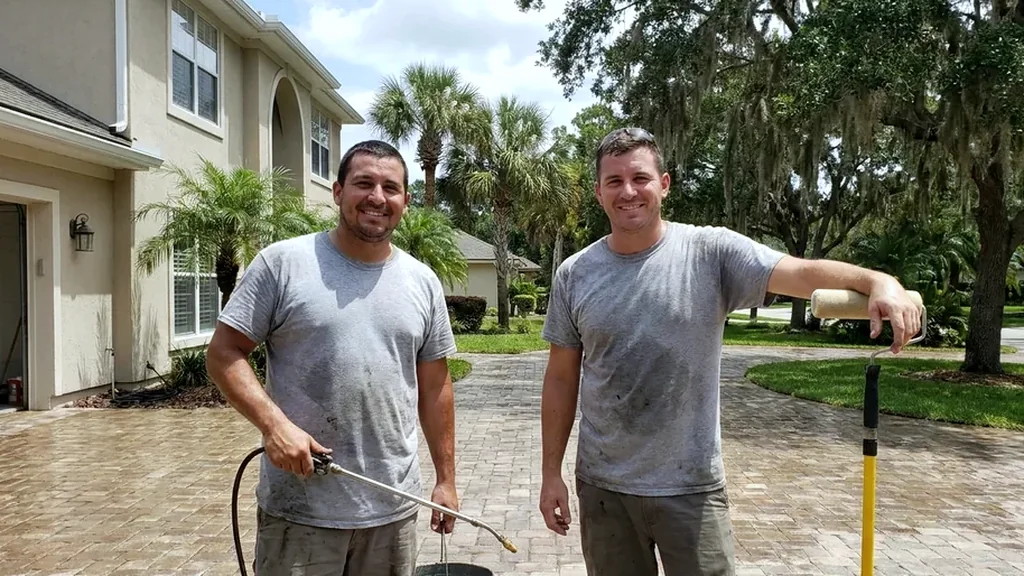
How does a paver sealing job work in Jacksonville Beach?
Look at the apron and the joints
The visit starts at the street, where most of the wear is. The contractor checks the apron for dips, the joints for missing sand and the surface for old sealer. If the old coat is solvent-based, a water-based product cannot go over it, so the product matters. The price is written out for you, and nothing is booked until you agree. Mention any past flooding or a recent roof or irrigation repair, since both can leave stains.
Wash away the salt and silt
Cleaning lifts salt film, grime and any silt left by past high water. The crew works from the house toward the street so wash water drains away from the doors. Spray stays off windows and planting beds. Oil from the car and rust from sprinklers get treated here too. The rinse water is directed away from beds and from the street side of the lot. Clean pavers let the sealer soak in evenly across the whole drive. Leaves and sand left on top would show through the finish.
Fix low spots and refill the sand
A wash removes joint sand, so new sand is swept in ahead of the sealer. A sunken apron or a lifted corner is reset first, since sealer keeps whatever it covers. A Jacksonville contractor uses silica joint sand. Filled joints stop pavers from creeping under tires. Ask how much sand the job will need, since an old driveway can take a lot.
Wait for the pavers to dry
Sealer needs a dry surface, and the beach gets steady rain from June to September. Humid air can keep pavers damp longer than they look. Rushing risks a white, cloudy finish that must be stripped and redone. Expect the day to move if the forecast is wet or the joints still hold water. That is a normal part of the job.
Seal in the finish you chose
The finish you chose, matte or wet look, goes on now. On a short driveway, turning tires scuff a wet look sooner than matte. Plan on two to five years between coats, going by common quotes. People can walk on it within a few hours, and cars can return after about a day. Use the street or the garage until then. Keep pets and children off the surface until the contractor says it is safe.
Complete paver services in Jacksonville Beach
Why does the wash come before the new joint sand?
A Jacksonville Beach job follows a set order. First comes a wash that clears salt and silt, then new joint sand, then a dry-down, then the coat. Doing it in that order keeps dirt from being sealed under the finish. To ask how long each part would take at your address, call (904) 664-0041.
Why do short beach driveways wear out sealer first?
Short driveways wear fast because the tires turn on the same few feet, and the sealer thins there first. Pool decks need grip, and walkways beside the house see the least sun and the most damp. Say which of these you have when you get a free estimate, and the quote will match the surfaces.
Which finish suits a Jacksonville Beach pool deck?
Two choices drive the sealer: the base, water or solvent, and the finish, matte or wet look. If an earlier owner used a solvent-based coat, water-based sealer cannot go over it. By the pool, pair matte with an anti-slip additive. For a second opinion on finish, call (904) 664-0041.
How should hurricane season shape your sealing date?
The Atlantic hurricane season runs from June 1 to November 30, and the beach gets its heaviest rain from June through September. Seal in a dry stretch, after the pavers have fully dried from a wash. A flexible date helps, because storms can move the schedule. To pick a day, get a free estimate.
Questions to ask before you hire
- Which sealer would you use here, and does the salt air off the Intracoastal change that choice?
- Do you take a card, and is anything due before the work begins?
- Will you clear the weeds and ant hills out of the joints first?
- Can you get the dark leaf stains from my oak trees out before you seal?
- Do you carry liability insurance, and can I see the policy before you start?
- Will sealing make my pavers darker, and is there a finish that keeps them light?
- If the sealer starts to flake in a few months, who do I call?
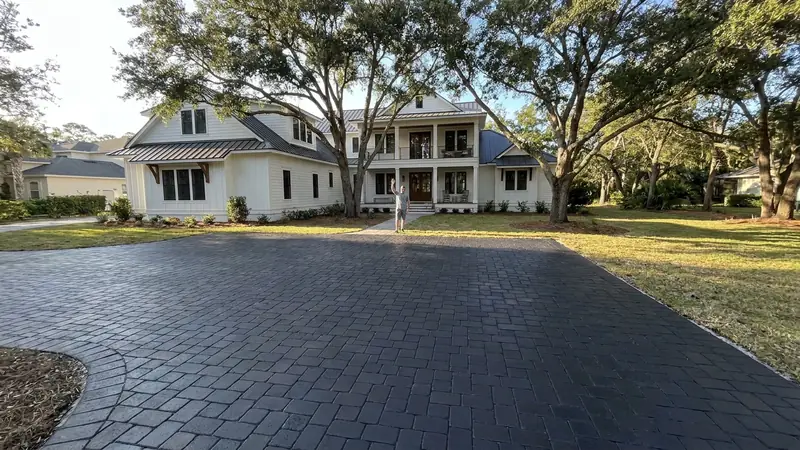
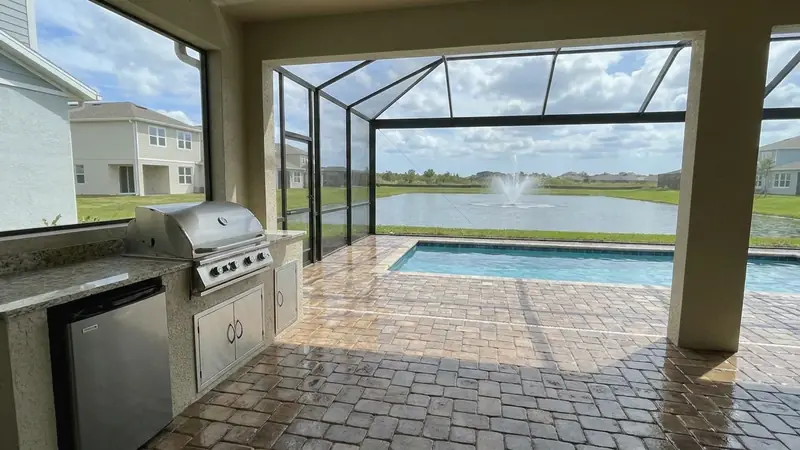
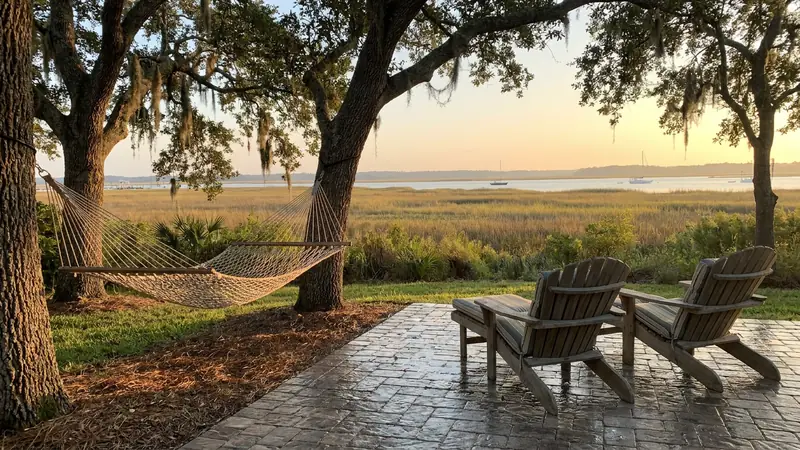
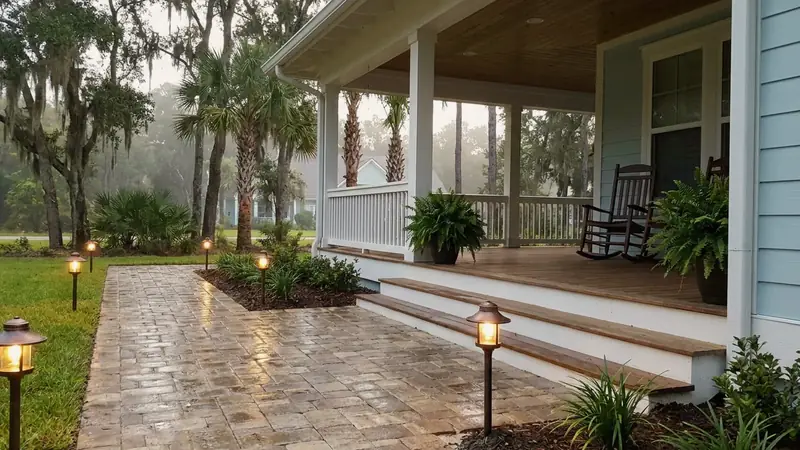
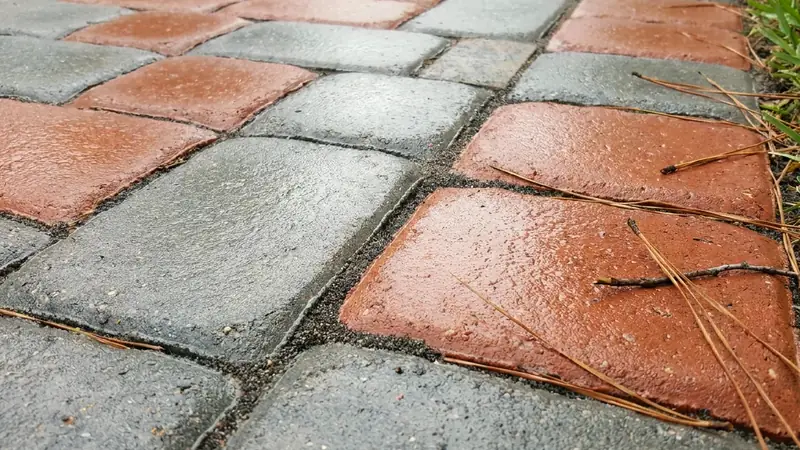
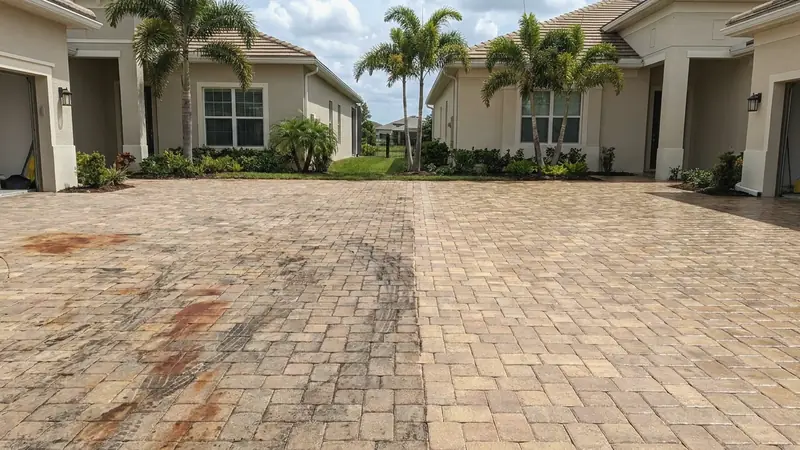
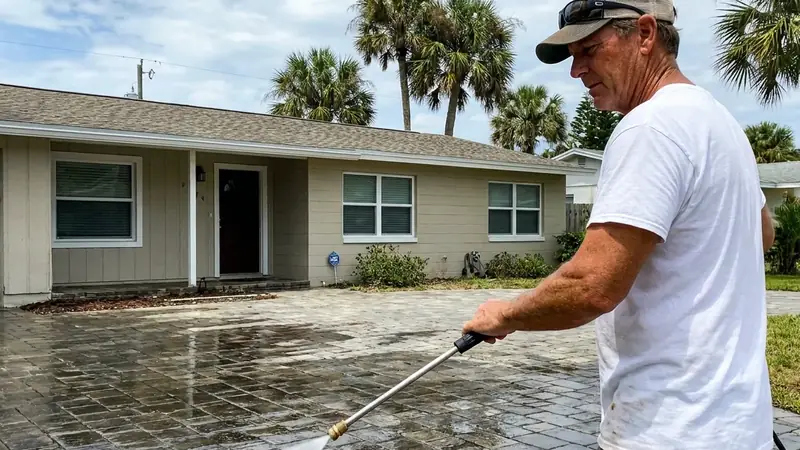
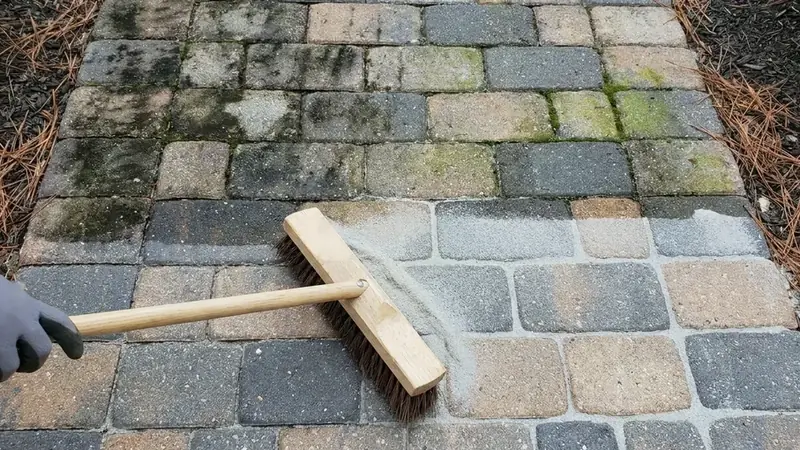
What do sealed pavers look like around Jacksonville Beach?
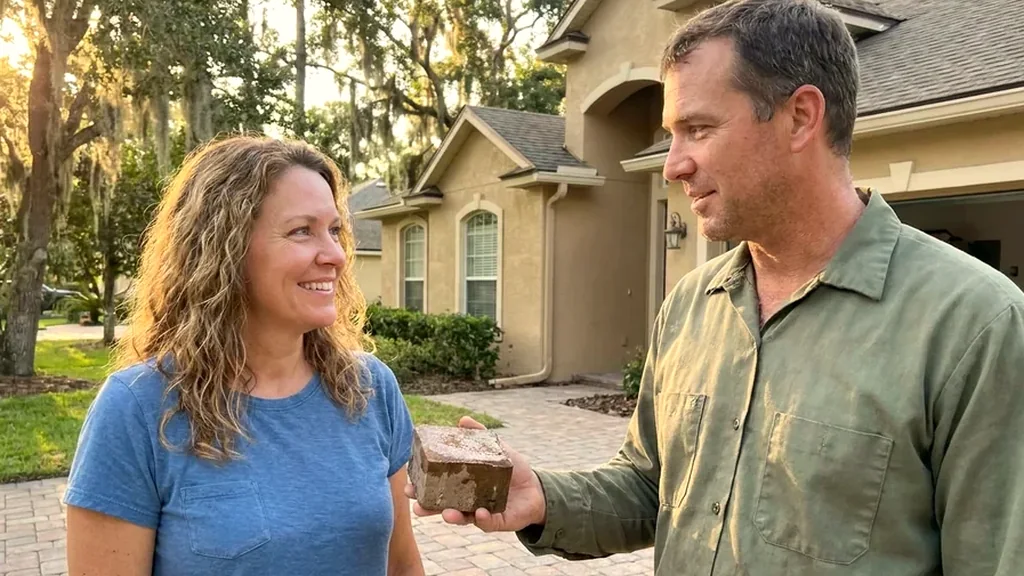
Why local matters in Jacksonville Beach
What do oceanfront blocks teach a contractor about flooding and sprinklers?
A contractor who works the Beaches knows how fast the weather can change near the ocean. He or she will ask when the street last flooded and whether sprinklers hit the driveway. Out-of-area crews may skip those questions, and the answers change the plan. To reach a contractor who knows the oceanfront blocks, call (904) 664-0041.
Why does the 2023 driveway standard matter to a local crew?
Local knowledge also covers the city. Someone used to Jacksonville Beach knows that driveway standards changed in 2023 and that the right-of-way strip belongs to the city. That helps you decide what to ask before work begins. You can get a free estimate and mention how far your pavers run toward the street.
How do rentals and vacant homes change the work schedule?
About one in nine homes here sat vacant at the last census, and many others are rentals or second homes. A local contractor will ask about access, parking and when you want the work done. That keeps the job from clashing with guests or tenants. Call (904) 664-0041 and tell the contractor your timeline.
How old is Jacksonville Beach, and what does that mean for my pavers?
What did the Sculls and Pablo Beach leave behind in the pavers here?
The Sculls built the first house in 1884, on the spot where they had pitched their tent. The settlement was called Ruby, became Pablo Beach in 1886 and took the name Jacksonville Beach in 1925. Casa Marina Hotel, a Mission-style building, was completed that same year and listed on the National Register in 1993. If your home is near the old downtown, you can get a free estimate and name your street.
How do the 1947 lifesaving station and Casa Marina era shape your surfaces?
The Red Cross lifesaving station dates to 1947, and mid-century homes by William Morgan add to the city's older look. Pavers of many ages sit side by side as a result. The 2020 census counted 23,830 people here in 12,789 homes and apartments. If you live near one of these landmarks, call (904) 664-0041 and name it for the contractor.
Frequently Asked Questions
Why is paver sealing so expensive in Jacksonville Beach?
Labor drives the cost, not the sealer. Cleaning, drying and re-sanding the joints take hours before a coat goes on, and salt film or an old failed coat adds more. The published range is $1.75 to $3.25 per square foot for the full job. A quote far under that range usually leaves out a step.
How long will paver sealing last in Jacksonville Beach?
Expect somewhere between two and five years before the next coat, going by what companies quote. Salt air, full sun and turning tires on a short driveway push toward the short end. A quick test is to sprinkle water. Beading shows a working coat, while water that soaks in and darkens the pavers shows a worn one.
What does it cost to re-sand and seal pavers in Jacksonville Beach?
Re-sanding is part of the clean, sand and seal price, which companies around Northeast Florida commonly publish at $1.75 to $3.25 per square foot. A larger area costs more in total even at the same rate. Ask for the square footage in the written quote. A short driveway and a large pool deck can total about the same area.
What do professionals use to seal pavers in Jacksonville Beach?
Professionals use either a water-based or a solvent-based sealer, and an old coat decides which one can go on. Pool decks get a product with an anti-slip additive. Ask for the product name so you can match it on the next coat. Keep that name with your house papers.
Do I need city permission for pavers next to my Jacksonville Beach home?
It depends on whether the pavers sit on city right-of-way. Most use of that strip needs a revocable encroachment permit, and the city updated its paver driveway standards in October 2023. The city page does not mention sealing, so ask city staff if you are unsure. Sealing existing pavers does not change where they sit.
When is a good time of year to seal pavers in Jacksonville Beach?
A dry stretch is what matters, because sealer needs a dry surface. Hurricane season runs June 1 to November 30, and November averages the least rain at about 2.5 inches. Spring is another option, as long as the forecast is clear for a day or two. Avoid a week when storms are likely.
Will sealer make my Jacksonville Beach pool deck slippery?
It should not, if the contractor uses an anti-slip additive. One Jacksonville company calls the additive non-negotiable on pool decks, because gloss without it is slippery when wet. Matte is the usual finish near pools. Ask to see the additive on the product sheet.
Is sealing worth it for a rental or second home in Jacksonville Beach?
It can be, since a coat protects pavers between guests or tenants. You choose the date, so the work can fit a gap in bookings. Cars stay off about a day, so mention any arrival that is close. Walking on it is fine sooner, usually within a few hours.
Ready for a Free Estimate in Jacksonville Beach?
Call (904) 664-0041 and tell us about your pavers.
Free, no obligation