
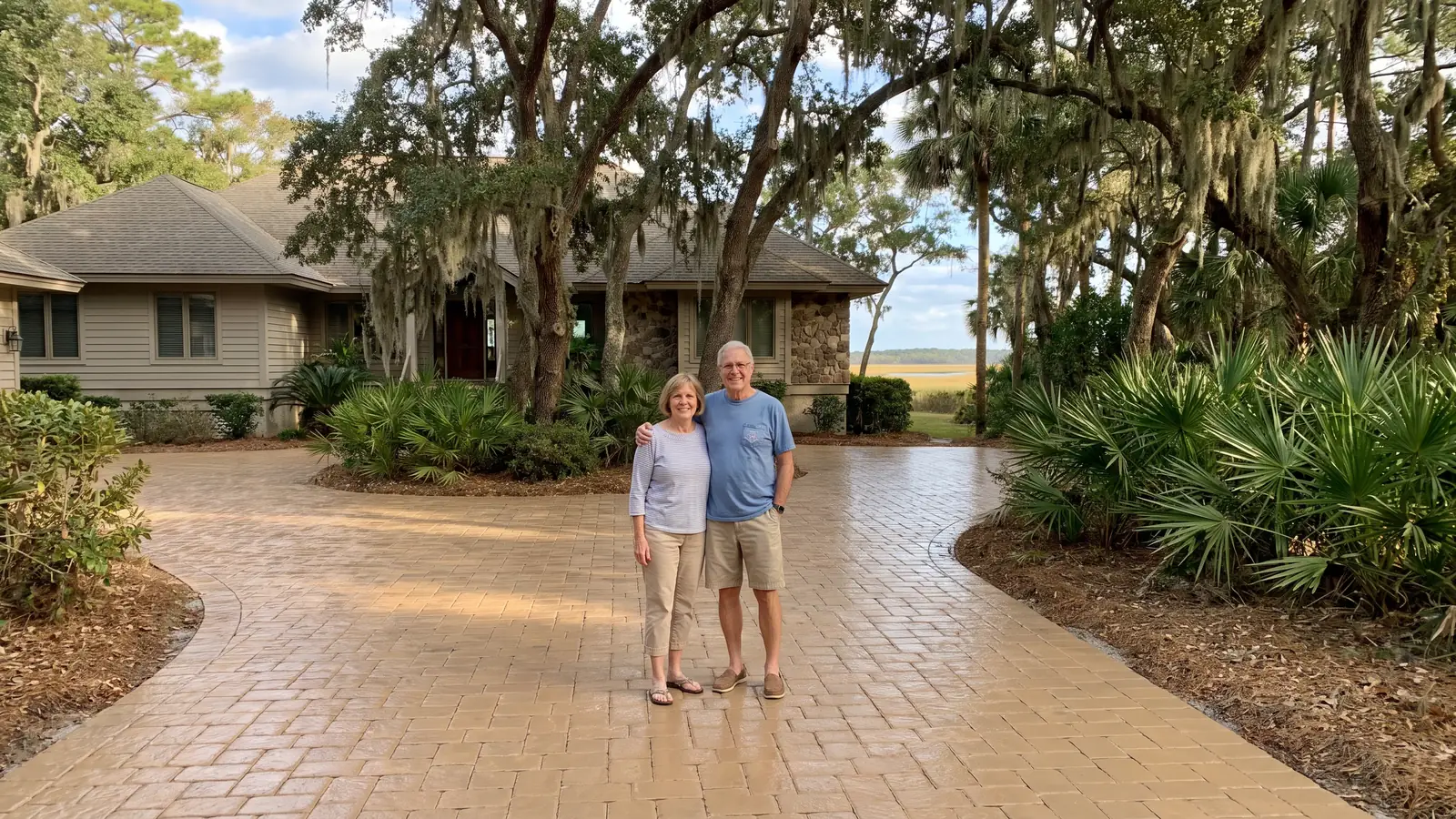
Warm brick color that stays rich and easy to rinse
Brick Paver Sealing in Palm Valley, FL
Call (904) 664-0041 for a free estimate on sealing your Palm Valley brick pavers.
- Brings out deeper paver color
- Fresh joint sand helps lock pavers in place
- Gives weeds less room to grow
- Makes the surface easier to keep clean
- Free estimate, no obligation
Request a Free Estimate
Free, no obligation.
Is brick paver sealing offered in Palm Valley, and how quickly will I hear back?
Brick paver sealing is offered across Palm Valley, FL by a local contractor, and a reply comes within 1 business day, usually sooner. The estimate is free and nothing locks you in. To begin, call (904) 664-0041.
Brick color softens under Florida sun and damp. A careful clean, fresh sand and a sealer picked for brick bring the red and tan back and keep green growth from settling in the joints. Because brick soaks up more than concrete, the sealer and the finish get chosen with extra care. Send a photo of the walk, patio or drive and say how old the brick is, then get a free estimate.
How do I know if my brick pavers are clay or concrete?
Ask the contractor to check, because the answer shapes the sealer. Unilock says brick pavers tend to be more absorbent than concrete and that different materials absorb at different rates. A sealer built for one may not suit another. Share any paperwork from the installer when you call (904) 664-0041.
Ask for the material by name
Have the contractor name the material in the written quote, so the sealer choice is on paper.
Check the paperwork
A builder's spec sheet or the installer's invoice often names the material. Keep it handy for the estimate visit.
Test a small patch
Unilock and Nicolock both say to test the sealer first. Nicolock suggests about 4 square feet in a hidden spot.
Why does brick need a different sealer plan than concrete?
Brick drinks more, so a coat that suits dense concrete can sit wrong on it. Unilock says brick pavers often want a matte or low-gloss sealer and calls out slower drying in shade. These four points shape the plan. To talk through them for your brick, call (904) 664-0041.
Absorbency
Unilock says brick soaks up more than concrete. That makes the choice of sealer more important.
Finish
Brick often looks best with matte or low gloss, Unilock says, and keeps its natural look.
Shade and drying
Unilock says cool shade can stretch drying to about 24 hours, which delays the coat.
Compatibility
Unilock says to test old and new sealers together. A clash can leave a whitish film.
What does a brick walk or drive pick up in Palm Valley?
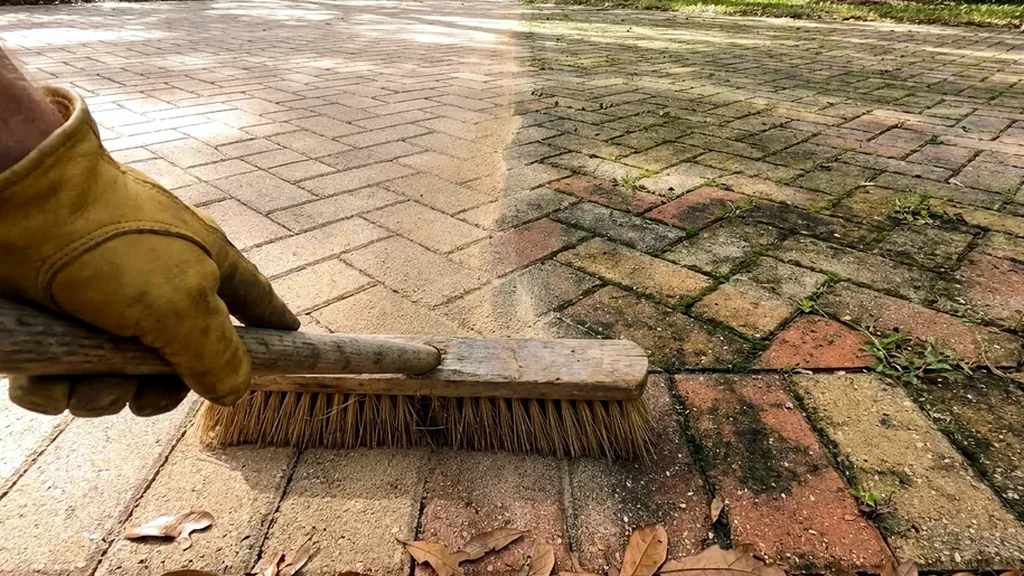
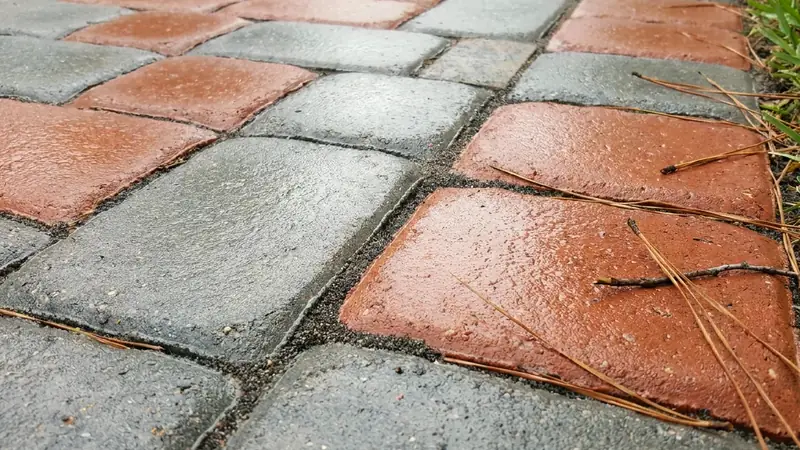
Humidity does most of it. Wikipedia reports a humid period here from April 26 to November 11, and Safe Touch says salt settles on pavers and palms drop debris that holds moisture. Six marks show up most on brick. To learn which are on yours, get a free estimate.
Green moss in the joints
Batchelder and Collins describes brushing moss from between pavers before washing. Shade keeps it coming back.
Leaf and palm stains
Nicolock suggests blowing leaves off before they stain. Debris left on brick holds water and darkens the face.
Salt film
Safe Touch calls it a white haze that needs the right rinse, not more pressure.
Efflorescence
Unilock says natural salts rise from the stone and fade over 2 to 3 months, sometimes a year.
Sprinkler rust
UF/IFAS says high-iron well water leaves orange streaks. Brick shows them clearly.
Oil and grease
Batchelder and Collins lists oil and grease among the things to clear before sealing.
Can harsh cleaners damage brick pavers?
Yes. Batchelder and Collins calls brick durable but says harsh chemicals can damage it, and it names a mild degreaser for the job. Unilock says moderate pressure at a steady distance keeps the face from etching. Ask the contractor which cleaner is planned when you get a free estimate.
Does a harder spray clean brick better?
No. Extra force can scar the face and empty the joints, Unilock says. A contractor lets the cleaner do the lifting. For a second opinion on a method, call (904) 664-0041.
Why does brick get a mild cleaner first?
Batchelder and Collins says brick can be damaged by harsh chemicals, so a mild degreaser comes first and stronger products only where a stain demands it. Ask the contractor for the full list of products planned. To get one, call (904) 664-0041.
What is the brick paver sealing process, from walk-through to cure?
Safe Touch calls a seal job about two days, and PD Home Pros says one to two days. On brick, the shade and the test patch can add a few hours. To set a date, call (904) 664-0041.
1. Walk and test
The contractor checks drainage, old sealer and neighborhood rules, then tries the sealer on a small hidden patch.
2. Clear weeds and growth
Batchelder and Collins says to clear moss and weeds before washing. Vegetation killer needs two weeks before sealing.
3. Wash with a mild cleaner
A matched cleaner and moderate pressure lift grime without scarring the brick.
4. Refill the joints
Fresh sand goes in after the brick dries. With polymeric sand, Nicolock says to wait 24 hours before sealing.
5. Seal in one pass
A sprayer and dry roller lay one even coat, Unilock says, with no stopping partway.
6. Keep off while it cures
PD Home Pros says feet after about 24 hours and cars after about 48.
What does brick paver sealing cost in Palm Valley?
No page read for this guide posts a brick-only rate, so the table builds the price from published pieces: the clean, sand and seal ranges from Safe Touch and PD Home Pros, the strip-and-restore range, and Unilock's sealer costs. For a number on your brick, get a free estimate.
| Brick area | Wash and re-sand ($0.75 to $1.00) | Clean, sand and seal ($1.75 to $3.25) | Strip and restore ($2.75 to $3.50) | Sealer product alone |
|---|---|---|---|---|
| 500 sq ft | $375 to $500 | $875 to $1,625 | $1,375 to $1,750 | $267 to $938 |
| 800 sq ft | $600 to $800 | $1,400 to $2,600 | $2,200 to $2,800 | $427 to $1,500 |
| 1,200 sq ft | $900 to $1,200 | $2,100 to $3,900 | $3,300 to $4,200 | $640 to $2,250 |
Math from published ranges, read in November 2026: PD Home Pros for the re-sand and strip columns, Safe Touch for $1.75 to $3.25, and Unilock for the product column ($80 to $150 a gallon covering 80 to 150 square feet). Product is not what a contractor charges. Your contractor sets the real price.
How much of the price is the sealer itself?
On Unilock's figures the sealer runs $0.53 to $1.88 per square foot, against $1.75 to $3.25 for the whole job. The difference pays for cleaning, sand, labor and repairs. Ask a contractor to show the split, or call (904) 664-0041.
How long do paver sealers last on brick?
Three to five years is the common answer from Unilock, Nicolock and Angi. Unilock puts solvent-based coats at four to five years, and Tropical Pressure Cleaning says two to three on the Treasure Coast. Shade slows wear but can slow drying too. To plan a recoat, get a free estimate.
Solvent-based coats
Unilock says they last about four to five years and suit high-traffic areas.
Water-based coats
Unilock says they give a lower gloss, clean up easily and can help stabilize joint sand.
Rain and sun
Angi says heavy rain and constant bright sun can shorten the life of a coat.
Do extra coats add years?
No. Nicolock says too much sealer locks in moisture and can cause peeling or a blushed white look. One careful coat usually wins. Ask how many coats are planned when you call (904) 664-0041.
Should new brick pavers be sealed right away?
No. Nicolock says to wait 6 to 12 months after installation, and Unilock says efflorescence can take 2 to 3 months or up to a year to clear. Sealing over it can trap haze under the coat. If your brick is new, say so when you call (904) 664-0041.
Wait 6 to 12 months
Nicolock gives that window after installation for new pavers.
Let the haze clear
Unilock says efflorescence fades in 2 to 3 months, sometimes a year.
Clean, then seal
Unilock warns that a coat over leftover stains makes them stand out.
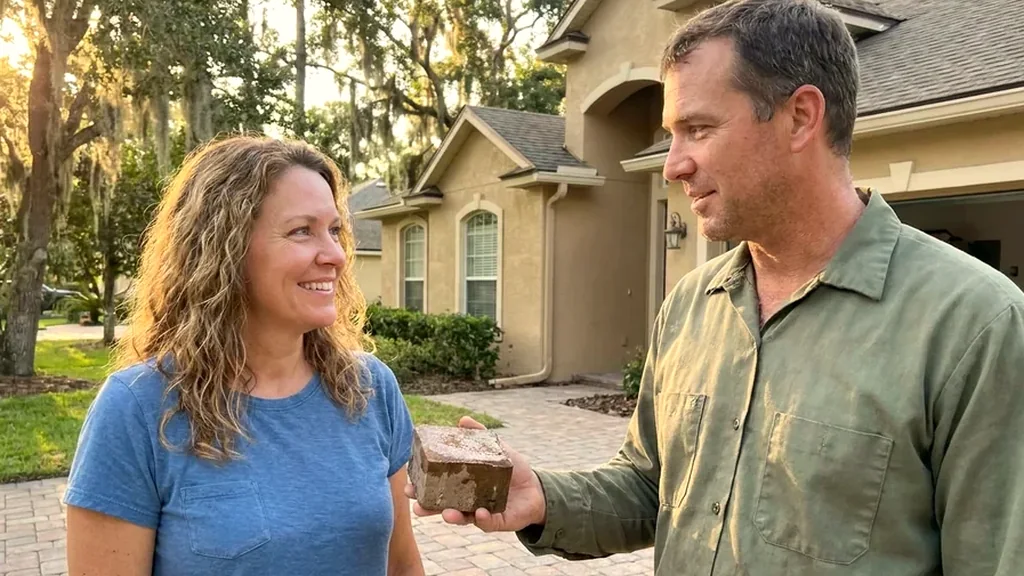
What if weeds or moss fill the brick joints?
Clear them before sealing. Batchelder and Collins says to brush moss out and pull weeds, and to wait at least two weeks after any vegetation killer. Tell the contractor what was sprayed and when. To start, get a free estimate.
Does sealing slow weeds from coming back?
Unilock says sealing tightens the top of sand joints so windblown seeds find fewer places to settle. Tropical Pressure Cleaning adds that polymeric sand hardens against weeds and ants. To ask about sand type, call (904) 664-0041.
Which nearby towns get brick paver estimates too?
Brick sealing estimates reach beyond Palm Valley across St. Johns, Duval and Clay counties, and every town below has its own page. If your street is missing, call (904) 664-0041.
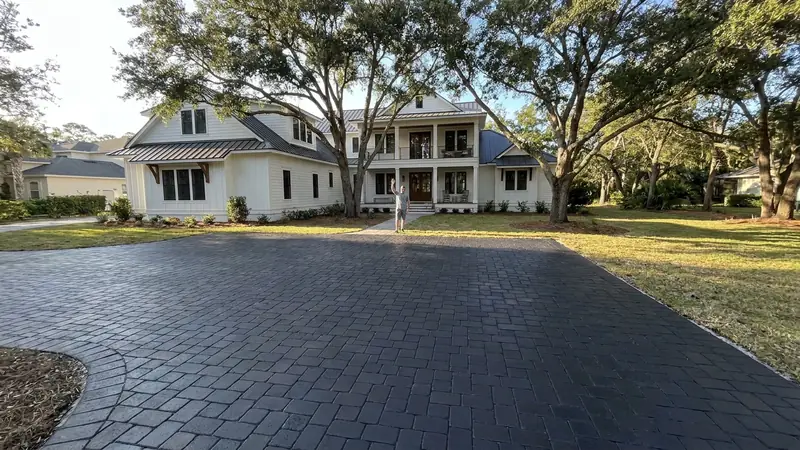
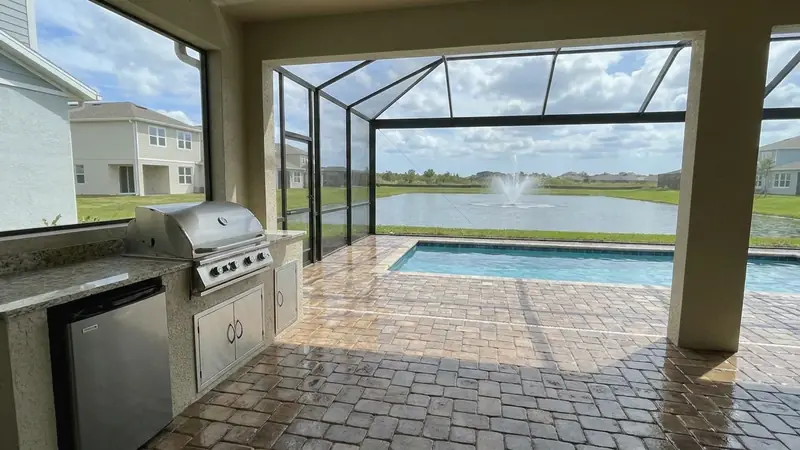
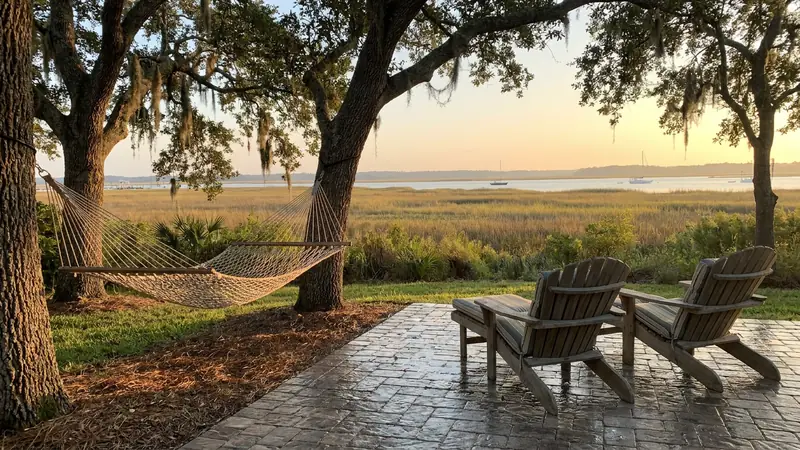
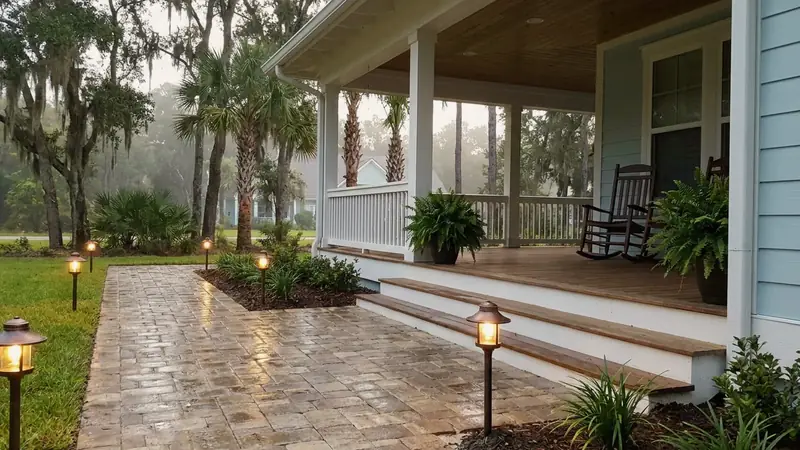
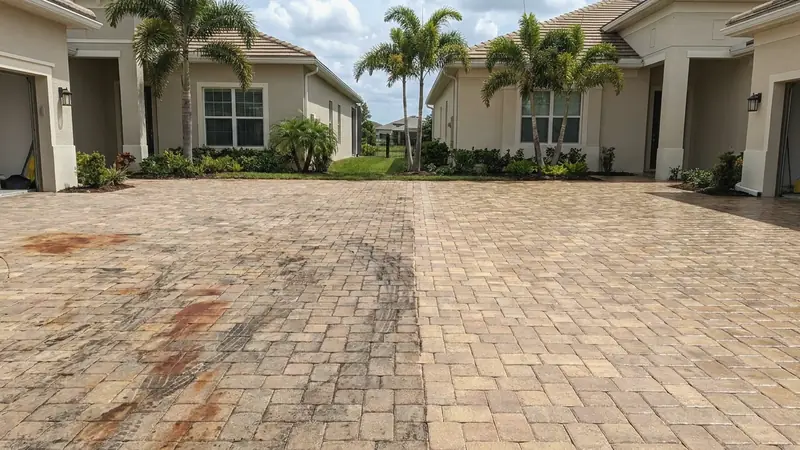
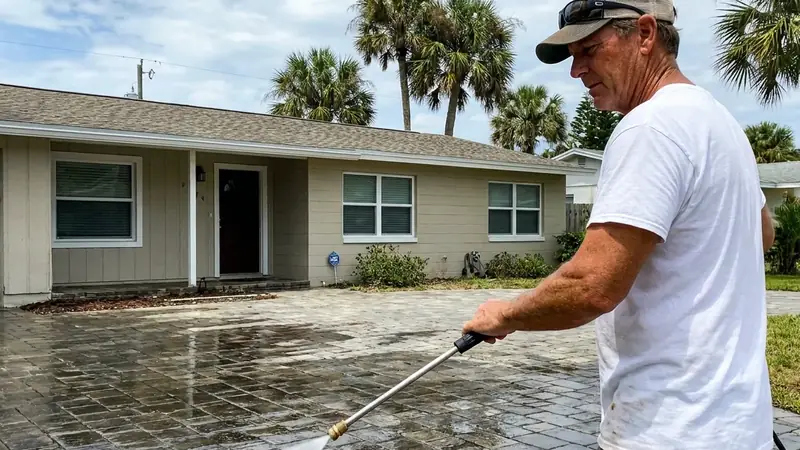
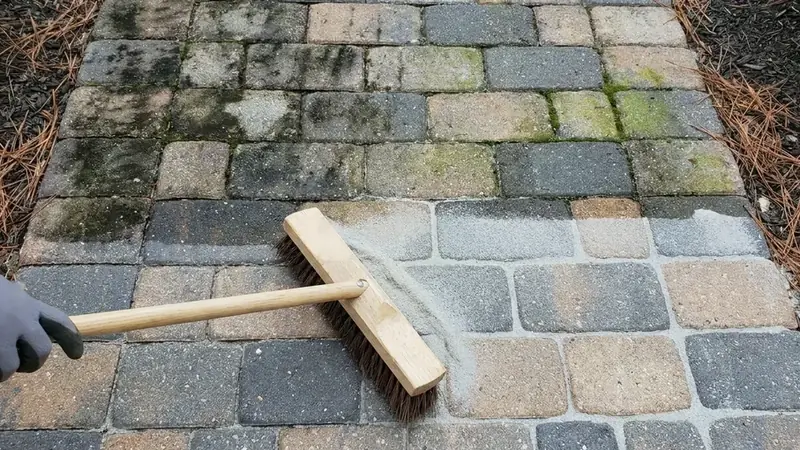
What do sealed brick pavers look like around Palm Valley?
What do homeowners ask about sealing brick pavers?
How long do paver sealers last?
Most last three to five years, the range Unilock, Nicolock and Angi all give. Unilock puts solvent-based coats at four to five years, and a Treasure Coast company says two to three. Angi adds that heavy rain and bright sun can shorten a coat.
Do I need to seal pavers in Florida?
Sealing is optional, but brick is a thirsty surface. Unilock says brick pavers tend to be more absorbent than concrete, which is why stain protection matters. Angi adds that sealing helps brick resist stains, fading and mildew, and humidity here runs high for months.
Can I clean, sand and seal my pavers?
A contractor does all three, in that order. Batchelder and Collins, a brick supplier, says dirt, oil, paint, efflorescence and old sealer must come off first, and Nicolock says to wait 24 hours after sanding. Sealing before cleaning locks the dirt in.
Why is paver sealing so expensive?
Brick adds care to the usual prep. The crew chooses a sealer that matches how the brick absorbs, tests it, and waits out a slower dry in shade. PD Home Pros lists $1.75 to $2.50 per square foot for the complete job, and Unilock puts sealer alone at $80 to $150 a gallon.
What sealer finish suits brick pavers?
Unilock says brick often does best with a matte or low-gloss finish that keeps the natural look. A glossy coat deepens color but can feel slick when wet. Tropical Pressure Cleaning describes water-based as matte and solvent-based as richer and glossier.
Can harsh cleaners hurt brick pavers?
Yes. Batchelder and Collins says brick is durable but can be damaged by harsh chemicals, and it names a mild degreaser. Unilock says to keep pressure moderate and steady. A contractor picks the cleaner by stain.
Should new brick pavers be sealed right away?
No. Nicolock says to wait 6 to 12 months after installation. Unilock adds that the white haze called efflorescence can take 2 to 3 months, or up to a year, to clear, and sealing over it can trap haze.
Do weeds in brick joints delay sealing?
They can. Batchelder and Collins says to wait at least two weeks after a vegetation killer before cleaning and sealing. Pulling weeds by hand has no wait, so tell the contractor what was used.
How much does brick paver sealing cost in Palm Valley?
No page read for this guide posts a brick-only rate. The published clean, sand and seal ranges are $1.75 to $3.25 per square foot from Safe Touch and $1.75 to $2.50 from PD Home Pros. A 600 square foot brick walk lands near $1,050 to $1,950 on the wider range.
Does humidity slow the drying of brick pavers?
Yes. Unilock says pavers dry in a few hours in warm sun but about 24 in cool shade. Wikipedia reports a humid period in Palm Valley from April 26 to November 11, and Angi prefers low humidity for sealing.
What happens if the sealer turns cloudy on brick?
Unilock says a whitish film points to trapped moisture, too much product or a clash with an older sealer. Nicolock warns that too much sealer locks moisture in and can cause peeling. A contractor can advise on a fix.
Can leaves and palm debris stain brick?
They can if they sit. Nicolock suggests a leaf blower to clear leaves before they stain, and Safe Touch notes that palms drop debris that holds moisture. Brush or blow the surface off often.
Which other paver services suit brick in Palm Valley?
Ready to bring the red and tan back in your brick?
Call, or send the short form, and a contractor writes back within 1 business day, often much sooner.
Free, no obligation