
Lift the marks that rinsing cannot
Paver Stain Removal in Palm Valley, FL
Oil, rust and leaf stains on Palm Valley pavers need the right cleaner, so call (904) 664-0041.
- Brings out deeper paver color
- Fresh joint sand helps lock pavers in place
- Gives weeds less room to grow
- Makes the surface easier to keep clean
- Free estimate, no obligation
Request a Free Estimate
Free, no obligation.
Can I get stains lifted off my Palm Valley pavers, and how fast?
A local contractor can treat stains on pavers in Palm Valley, FL, and an answer to your request comes inside 1 business day, usually long before. The look at the marks and the estimate are free. To describe your stains by phone, call (904) 664-0041.
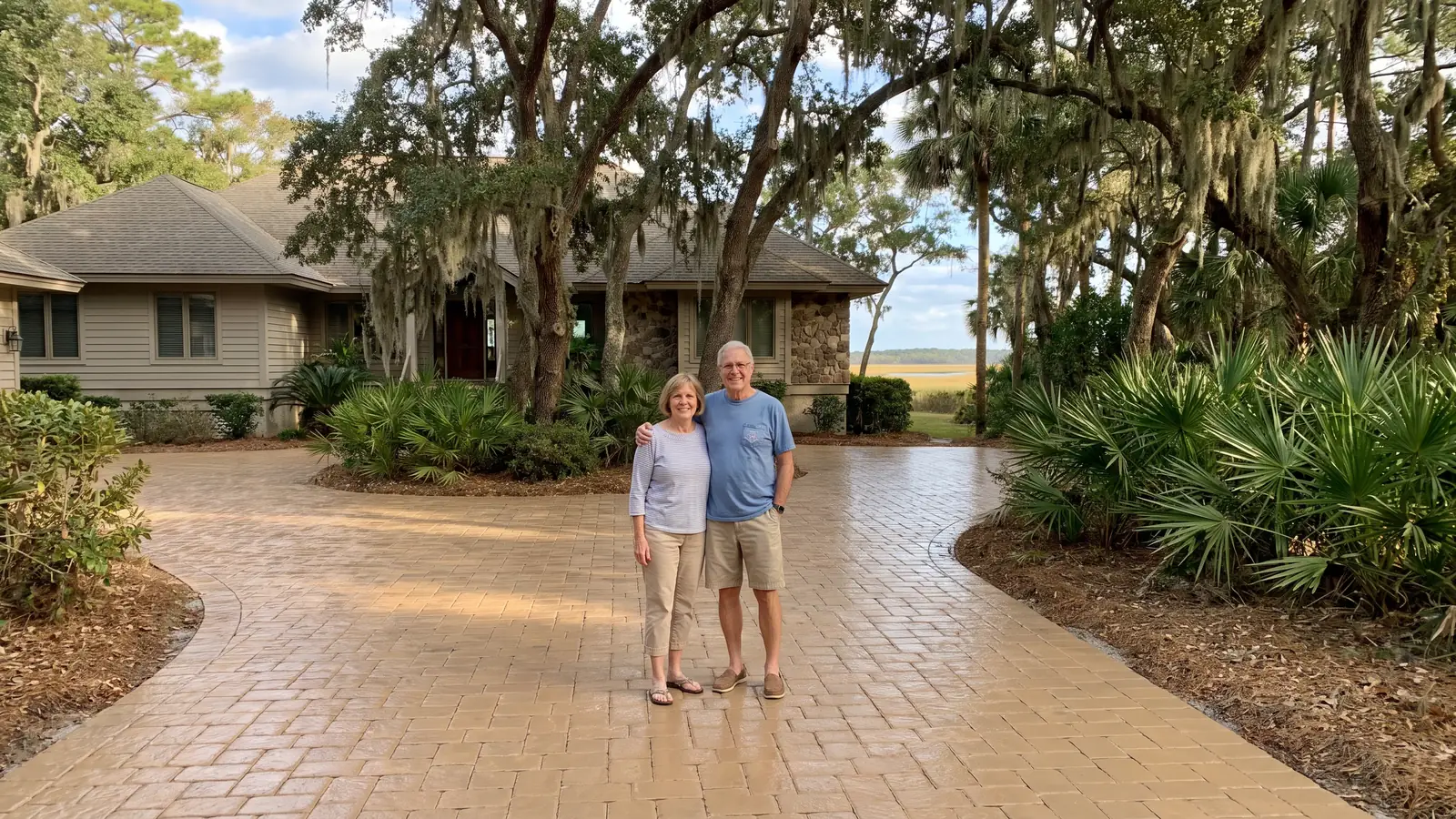
A stain is not dirt, and that is why a hose does nothing to it. Oil, rust, leaf tannin, salt and mildew each need their own cleaner, and the wrong one can fix the color while hurting the pavers or the sealer. Picture the walk by the front door with the brown streaks gone and the grey patch under the grill clear again. Tell a contractor what the marks look like when you get a free estimate.
Which towns can book paver stain removal?
Stain work is booked across St. Johns, Duval and Clay counties, and each town below has a page of its own. For an address you do not see, call (904) 664-0041.
What kind of stain is on my pavers?
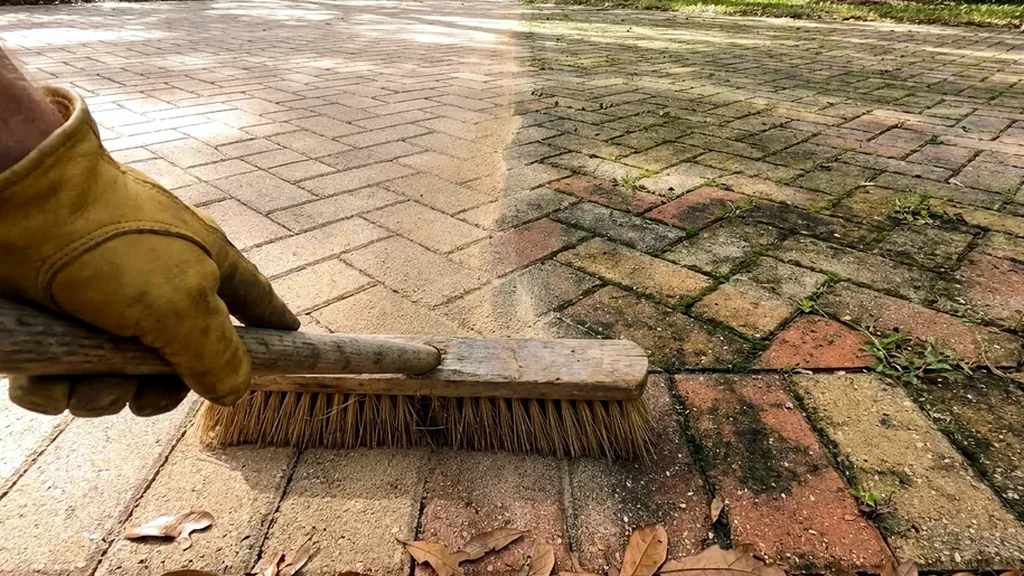
Name the stain and you know the method. Cambridge Pavingstones, a paver manufacturer, keeps a stain by stain chart, and the first line of each entry is the source. The cards below follow that idea for the marks seen most often near the water. To have a contractor name yours, get a free estimate.
Oil and grease
Drips from cars and grills. Unilock says to act quickly, since oil that dries into the paver is harder to lift.
Rust
Cambridge says to find the source first: sprinklers, patio furniture or fertilizer. Unilock calls rust on natural stone difficult.
Leaf and tannin
Western Interlock says tannins bond with the paver, so brown leaf marks do not simply rinse off.
Efflorescence
A white powder of calcium salts, harmless to strength, per Unilock, but it must go before sealing.
Mulch and wood rot
Cambridge lists wood rot, mulch and tobacco marks as a group of their own.
Mildew and algae
Green and black films in shade. Immaculate Soft Wash says soft washing kills the growth that causes the color.
Salt haze
Safe Touch calls it a white haze after a windy week that is not mildew and needs a proper rinse.
Tire marks and asphalt
Cambridge treats these separately from oil, and for a small mark replacing a paver can be easier.
Food and drink
Unilock lists wine, coffee, berries and sauces that seep into fine pores.
Why do Palm Valley oaks leave brown marks on pavers?
Leaves carry tannins, and tannins hold on. Western Interlock explains that they bond with the paver, which makes leaf stains hard to remove. Cambridge adds the point homeowners dislike: the cause is the leaves, they fall every year, and a decision has to be made about the tree or about repeat cleaning. Plantation Oaks is one of the neighborhoods Wikipedia lists on this island. To plan for yours, call (904) 664-0041.
Palm Valley is humid for about six and a half months, April 26 to November 11, Wikipedia reports from Weather Spark, so wet leaves sit longer here. Safe Touch lists tannin among the stains it treats instead of only wetting. Ask how a contractor handles it when you get a free estimate.
How are oil stains removed from brick pavers?
Oil comes out in two moves. PROSOCO says a degreaser goes first and clears the surface film, and it also shows how deep the rest went. Deeper stains get a poultice that draws the oil out as it dries over 5 to 8 hours, and most lift in one application, with severe ones needing more. For a stain on your driveway, call (904) 664-0041.
Cambridge describes the same idea: soak up excess, apply a remover and leave it 6 to 8 hours until it dries to a powder, then sweep it off. Speed helps, so a fresh drip is easier than one baked in by summer sun. To book a visit for oil marks, get a free estimate.
Will a pressure washer lift the stain?
Pressure removes the surface, not the cause. Immaculate Soft Wash says pressure washing strips the bulk of the sediment, like mowing a lawn, while soft washing kills the growth underneath. Safe Touch makes a similar point about salt haze: the right rinse, not more PSI. Heated pressure can help with oil, Immaculate adds. Ask which tool matches your stain when you get a free estimate.
What does a rust remover do to sealer?
It damages it. Cambridge states that rust remover will damage a sealer, and both Cambridge and Unilock tell owners to test a small area first. In practice a contractor treats rust, checks the sealer in that spot and plans a touch-up coat. For sprinkler rust on a sealed driveway, call (904) 664-0041.
How are stains handled on travertine and other natural stone?
Gently, and with stone-safe products. Unilock lists marble, limestone and travertine as acid-sensitive and names a high-alkaline cleaner for them, while JB Powerwash Services says oil on travertine often needs a poultice made for natural stone. A wrong acid can leave a dull ring that no wash fixes. The travertine sealing page covers the stone in more detail. To describe yours, get a free estimate.
Should pavers be sealed after the stains are out?
A sealer makes the next spill easier. Paverson says a good sealer makes an oil drip or a spill easier to clean off, though it wears and needs reapplying every few years. Unilock says pavers have fine capillaries that trap wine, motor oil and wet leaves, and that stains set harder over time. The paver sealing page explains the choices. To ask about a coat, call (904) 664-0041.
What does paver stain removal cost in Palm Valley?
Published pages list per square foot rates for washing, re-sanding and stripping, but none for stain treatment alone, so the table is built from those pieces. A small stained entry can cost far less than a driveway, and spot work is quoted after the contractor sees the marks. To get a price on your stains, get a free estimate.
Safe Touch puts a full clean, sand and seal at $1.75 to $3.25 per square foot on the First Coast. Stains that go deeper, such as old oil or sealed-in rust, can push a job toward the strip and restore column. Ask what the quote assumes about depth. To check a bid you already hold, call (904) 664-0041.
Need more than stains handled? Read about paver cleaning and joint sand, scan every town on the list or go back to sealing in Palm Valley.
| Stained area | Wash only | Wash and new sand | Strip old sealer and restore |
|---|---|---|---|
| 150 sq ft (an entry or a stained corner) | $45 to $75 | $112 to $150 | $412 to $525 |
| 400 sq ft (a patio) | $120 to $200 | $300 to $400 | $1,100 to $1,400 |
| 800 sq ft (a driveway) | $240 to $400 | $600 to $800 | $2,200 to $2,800 |
No page found for this guide publishes a price for stain treatment by itself, so the columns use the published pieces: PD Home Pros rates of $0.30 to $0.50 to wash, $0.75 to $1.00 to wash and re-sand and $2.75 to $3.50 to strip and restore, read in November 2026. Oil poultices, rust treatments and leaf stain work are usually quoted after the contractor sees the marks.
How often do stains come back?
They return whenever the source does. Cambridge points out that leaves fall yearly, and Unilock says efflorescence resurfaces when water keeps getting into the base, which happens with poor drainage. Sprinkler rust follows the spray pattern. Fix the source, and a cleaning lasts. To build a plan around your yard, call (904) 664-0041.
Leaves
Cambridge says leaves fall yearly, so tannin marks return each fall under the same branch.
Sprinklers
Rust follows the spray pattern, so an adjusted head matters as much as the cleaner.
Drainage
Unilock says efflorescence resurfaces when water keeps infiltrating the paving.
Cars and grills
Oil drips repeat where the car parks, and a mat or a sealer helps.
Humidity
About six and a half humid months a year keep algae and mildew coming back in shade.
Salt air
Safe Touch says salt settles on pavers, and a haze can reappear after a windy week.
What is the paver stain removal process, step by step?
Stain work follows the stain, so these six steps shift a little from one job to the next. Skipping the test spot is the step that causes harm. To book a visit, get a free estimate.
1. Read the stain
The contractor identifies oil, rust, tannin, salt or growth by color, location and source.
2. Test one spot
Cambridge and Unilock both tell owners to test a small, hidden area before treating a large one.
3. Treat the stain
A degreaser, poultice, rust treatment, soft wash or stone-safe cleaner is picked to fit.
4. Rinse and recheck
The surface is rinsed and allowed to dry so deeper stains show themselves.
5. Repeat or move up
Severe oil may need a second poultice, and a failed coat may need stripping.
6. Protect the result
Fresh joint sand and a sealer are offered so the next spill is easier to clean.
What should I tell a contractor before stain work begins?
A few facts save a return trip. Mention what spilled, when it happened and whether the pavers are sealed. The contractor uses that to choose the cleaner and the pressure. To pass those details along, call (904) 664-0041.
What caused it
A leaking car, a grill, a sprinkler head or an oak branch each points to a different product.
How long it has been there
Fresh marks lift faster, and Unilock stresses acting quickly on oil.
Whether there is a sealer
Rust remover can damage sealer, so a sealed surface needs a plan.
What stone it is
Natural stone is acid-sensitive, and concrete pavers are not.
Where the water goes
Efflorescence and rust tend to return where drainage or spray stays the same.
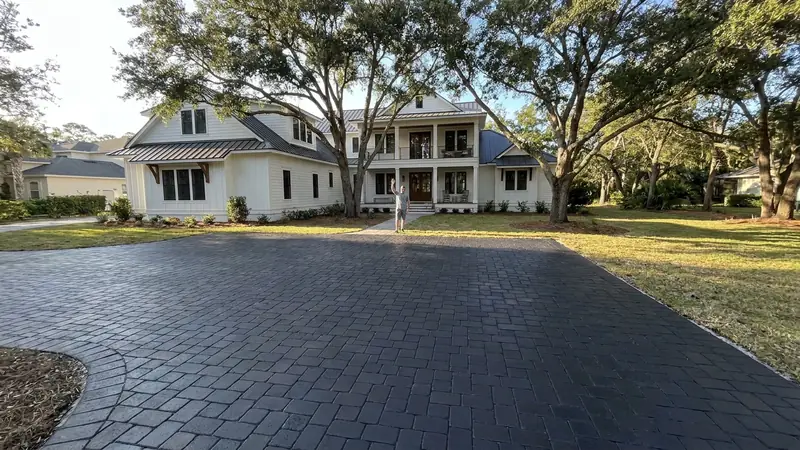
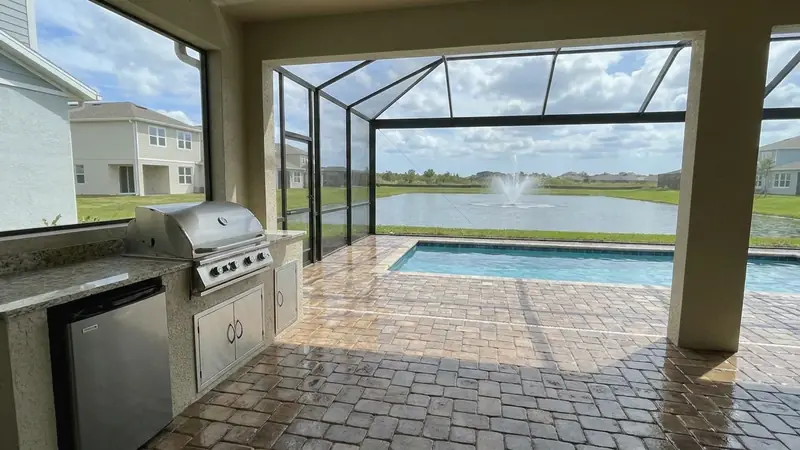
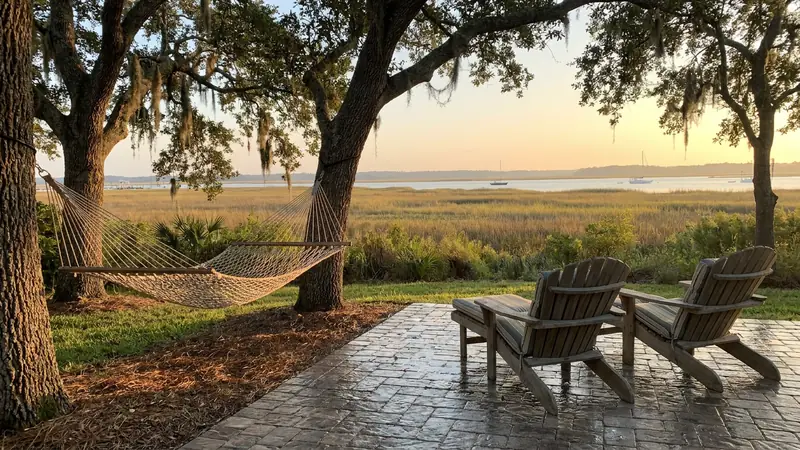
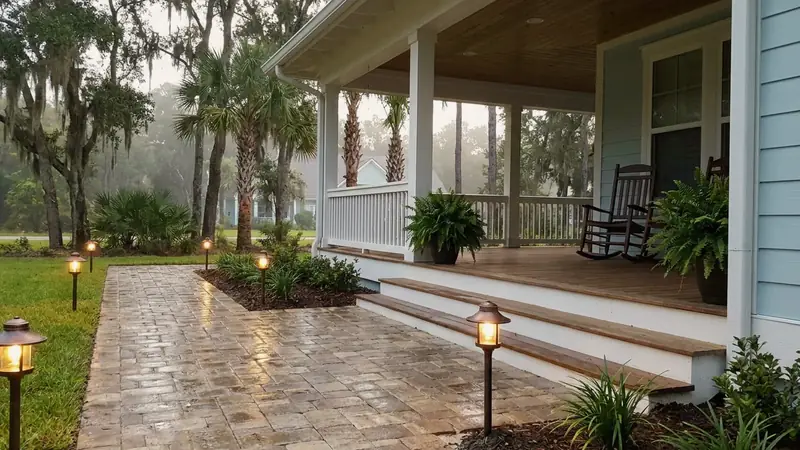
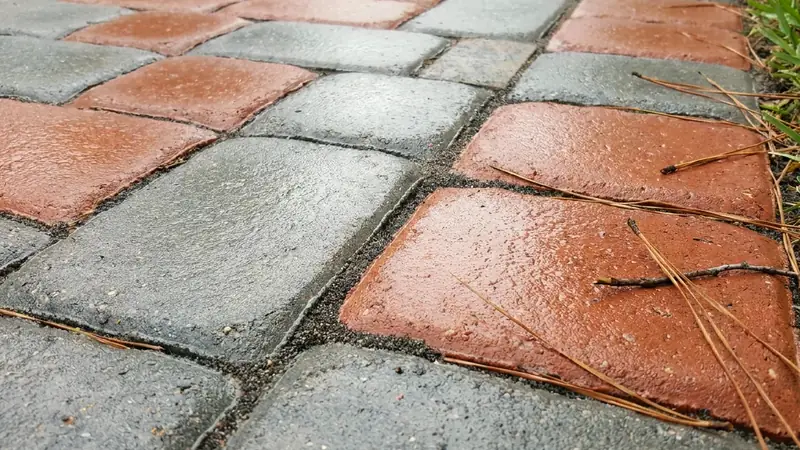
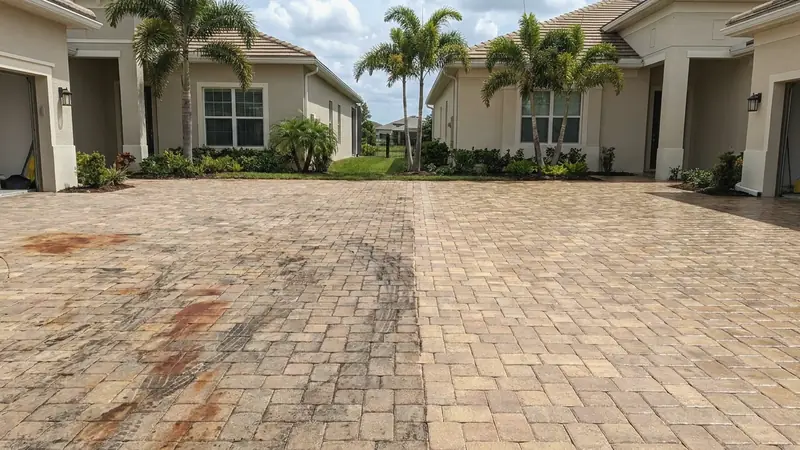
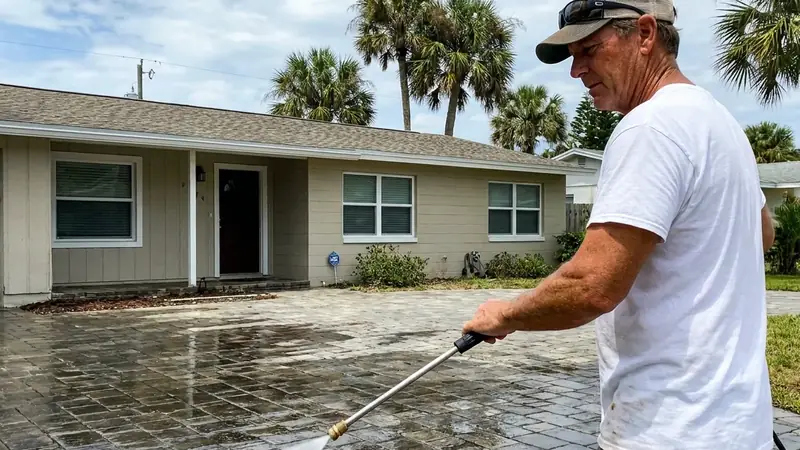
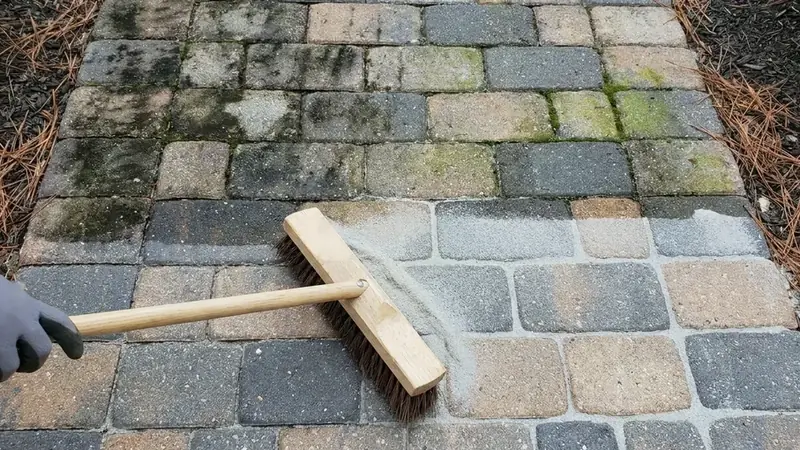
What do pavers look like after stain removal around Palm Valley?
Frequently Asked Questions
How do I remove oil stains from brick pavers?
A contractor starts with a degreaser to clear the surface film, then treats anything deeper with a poultice. PROSOCO says the poultice takes 5 to 8 hours to dry and draws the oil out, and severe stains can need a second pass. Cambridge Pavingstones gives a similar 6 to 8 hours for oil that has soaked in.
Is there a pressure washing business in Florida that cleans pavers?
Yes, and several list Palm Valley. Safe Touch and PD Home Pros both name Palm Valley in their service areas, and both price paver cleaning by the square foot. A local contractor can look at your stains first and say which method fits.
What is the right paver sealer for Florida after stains are out?
Pick it for the material and the look. Paverson, a Miami company, says a good sealer brings the color up a shade and makes an oil drip or spill easier to clean, though it wears and needs reapplying every few years.
Why is paver sealing so expensive?
The sealer is the smaller part. Washing, stain treatment, repairs, joint sand and drying time come first, and stripping a failed coat costs extra. PD Home Pros lists $0.30 to $0.50 per square foot for washing alone and $1.75 to $2.50 for a complete clean, sand and seal.
Why do my pavers turn brown under the oak trees?
Leaves hold tannins. Western Interlock says tannins bond with the paver and are hard to remove, and Cambridge notes that leaves fall every year, so the stain comes back unless the source changes.
Does a sprinkler leave orange stains on pavers?
Often, yes. Cambridge tells contractors to find the rust source first, naming sprinklers, patio furniture and fertilizer, and Safe Touch calls Palm Valley a salt plus irrigation area. Adjusting the spray heads keeps the stain from returning.
Will a rust remover harm my sealer?
It can. Cambridge says rust remover will damage a sealer, which is why a contractor tests one paver first and plans to reseal that area after treatment.
Can stains be removed from travertine pavers?
With the right chemistry. Unilock lists marble, limestone and travertine as acid-sensitive and points to an alkaline cleaner, and JB Powerwash says oil stains often need a poultice made for natural stone.
Does pressure alone get stains out?
Usually not. Immaculate Soft Wash, a Central Florida company, says pressure washing strips the bulk of the surface but does not kill the growth behind discoloration, and Safe Touch says a salt haze needs the right rinse, not more PSI.
Is the white powder on my pavers a stain?
It is usually efflorescence. Unilock says it is calcium salts, does not weaken pavers and must be cleared before sealing, and it can return if water keeps getting in.
Will a stain come back after it is removed?
It can when the cause stays. Leaves fall every year and sprinklers run every morning. Unilock adds that efflorescence resurfaces when drainage is poor.
Can stains be prevented?
They can be slowed. A sealer makes drips and spills easier to clean, per Paverson, and Unilock says materials like wine, coffee, oil and wet leaves settle into fine pores if left.
Which other paver services can be booked in Palm Valley?
Ready to see the stains gone from your Palm Valley pavers?
Call or send the short form, and a contractor writes back within 1 business day, often much sooner.
Free, no obligation